


Aetna denies Kobach’s allegations and says it will defend itself against the lawsuit
By:Morgan Chilson
Kansas Reflector
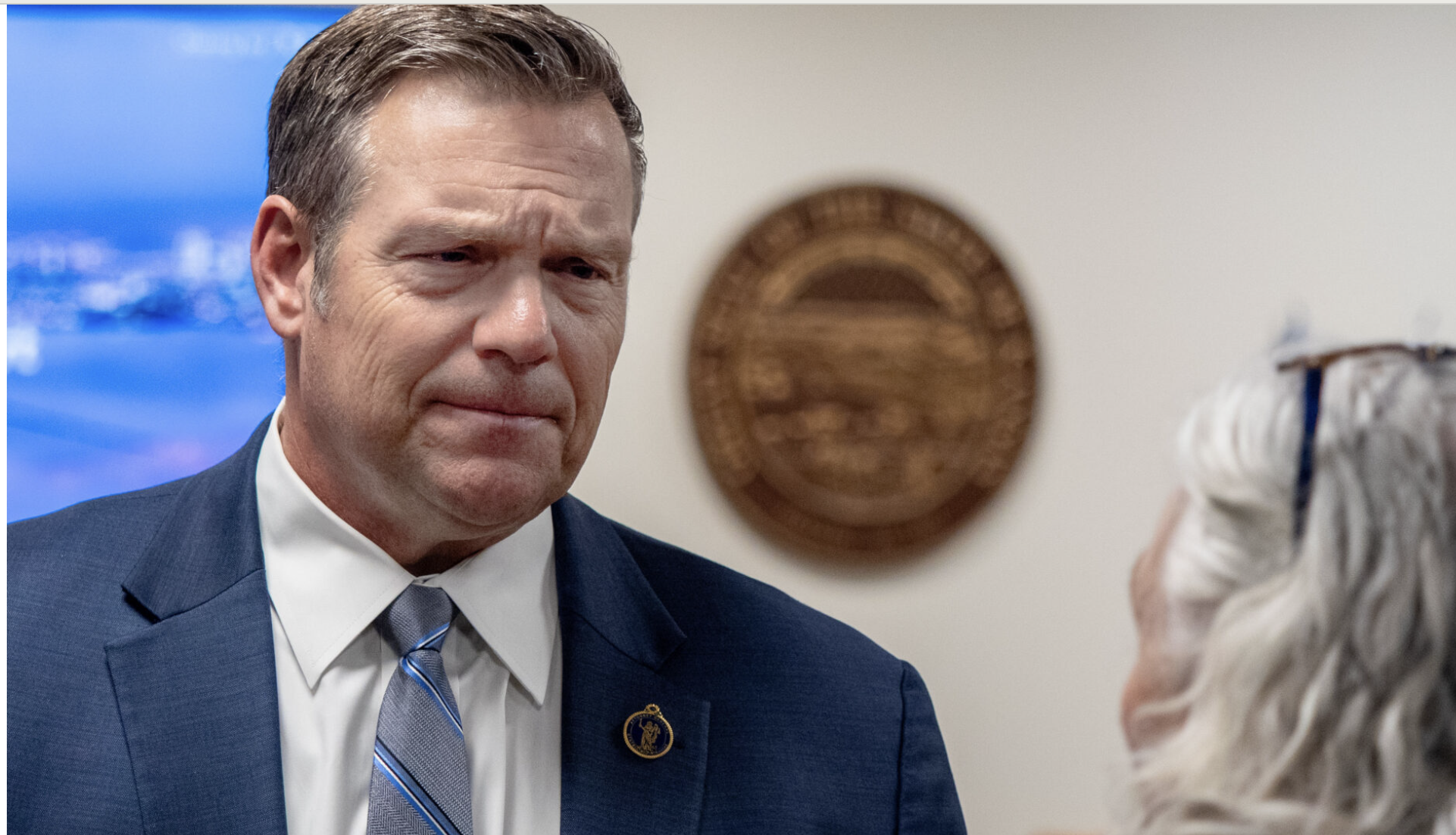
TOPEKA — Kansas Attorney General Kris Kobach has filed a lawsuit accusing Aetna Inc. of “misappropriating” state funds through a mechanism found to violate federal law in other court cases, an allegation the health insurer denies.
Amber Smith, deputy attorney general of the Public Protection Unit, said Aetna failed in its fiduciary duty and has “chosen to misappropriate Kansas funds to pay itself.”
Aetna is a third-party administrator for the State Employee Health plan, serving along with Blue Cross Blue Shield of Kansas.
The lawsuit, filed June 24 in Shawnee County District Court, alleges that Aetna used a billing process called “cross-plan offsetting” to pay itself back using state money when Aetna overpays providers in unrelated insurance plans, a news release from Kobach’s office said.
The Kansas lawsuit also accuses Aetna of charging the state “hidden or obfuscated” fees for out-of-network claims using a repricing structure that’s been challenged in federal court.
The lawsuit asks the courts to order Aetna to stop using practices that use state money to offset costs for other plans and that restitution be made to the state.
An Aetna spokesperson denied any wrongdoing in a statement emailed to Kansas Reflector.
“Aetna is committed to safeguarding the money provided by Kansas taxpayers to fund the state employee health plan. We deny these allegations and will defend ourselves vigorously,” the statement said.
How federal law defines the billing practice
The lawsuit focuses on cross-plan offsetting, a process other courts nationwide have said violates federal law defined in the Employee Retirement Income Security Act of 1974.
In a lawsuit filed about the practice, the U.S. Department of Labor described how an insurance company used cross-plan offsetting. The department said the company overpaid a healthcare provider for services received by a plan participant. Instead of trying to recoup the overpayment, the company “took the payment it admits was due to the same provider for services rendered to a different plan participant in a different plan.”
The Department of Labor treats the practice as a federal law violation. In late 2023, the department settled with EmblemHealth, a New York-based healthcare company, for using the practice. The insurer agreed to stop cross-plan offsetting in Employee Retirement Income Security Act-covered health plans and to reimburse workers and families harmed by the practice, the department said in a release.
Aetna and Kansas
In the lawsuit, Kobach said Aetna was entrusted to determine medical claims, process provider payments and “administer the Plan fairly, lawfully, and in the best interests of plan participants.”
Instead, Aetna treated those obligations as optional, the lawsuit said.
“Kansas is the first state to sue Aetna for misusing state health plan dollars to benefit the health plan administrator,” Smith said in the release. “However, in other private lawsuits, courts have ruled against Aetna’s cross-plan offsetting scheme as a violation of the company’s fiduciary duty to its customers. Arizona has also sued Aetna in a far-reaching antitrust case related to its conduct for out-of-network claims.”
In the lawsuit, Kobach says Aetna’s role with the State Employees Health Plan allows the company “substantial discretion” over operations, including whether claims are approved, how they are priced, what portion of billed charges is paid to providers and whether payments are later reversed or recouped.
“That discretion is exercised over public assets, on behalf of public employees, under a contract that obligates Aetna to act in the interests of the Plan and its participants,” the lawsuit filing said. “It carries fiduciary weight regardless of the label the parties have given the relationship.”
The Kansas Employee Health Care Commission recently chose to retain Aetna and Blue Cross as the two third-party administrators for state employees. The commission considered dropping BCBSKS because Aetna’s bid was lower but retained both companies.
When asked if the commission had been aware of possible issues with Aetna’s operations or that a lawsuit would be filed, Samir Arif, spokesman for the Kansas Department of Administration, said the department doesn’t comment when a lawsuit is ongoing.