


A bill mandates school districts create policies restricting cell phone use during school hours
BY ANNA KAMINSKI
Kansas Reflector
TOPEKA — Kansas legislators will pursue a statewide school cell phone ban, superseding the state education board’s past directives to allow local districts to deal with cell phones as they see fit.
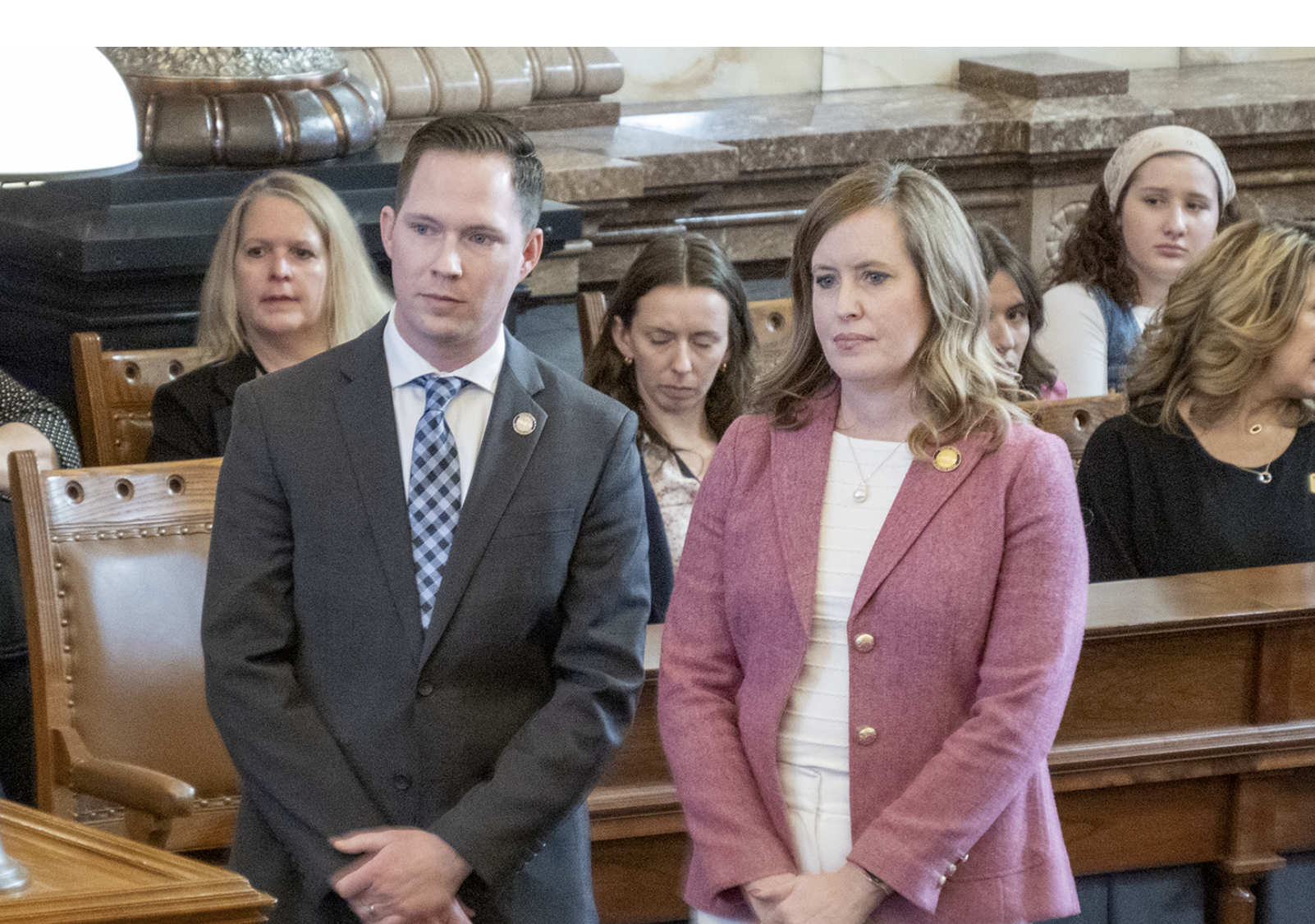
The initiative already has the support of two-thirds of the Senate, according to a joint announcement from Sens. Chase Blasi, an Andale Republican, and Dinah Sykes, a Lenexa Democrat.
If passed into law, Senate Bill 302 would require each local school board and nonpublic school’s governing authority to create policies dictating student cell phone use during instructional time by Sept. 1.
The bill establishes a bell-to-bell mandate, requiring students to power off and store any personal electronic communication devices, and it forces districts to create disciplinary actions and enforcement procedures for any violations. It also allows districts to limit or prohibit cell phone usage during school-sponsored activities that take place outside of normal school hours.
The bill will be a “high priority,” the Tuesday announcement said. It was filed less than a week before the start of the 2026 legislative session.
“Phone-free schools give students space to think, build authentic human relationships and protect student mental health from constant digital pressure,” Blasi said. “The longer phones stay in classrooms, the harder it becomes to undo the damage.”
If the legislation becomes law, it would override local boards’ existing policies if incongruous with the state’s mandates. It also could bolster the Kansas State Board of Education’s previous guidance.
The board unanimously approved a list of recommendations in December 2024 that encouraged districts to adopt bell-to-bell policies that mandate K-12 students’ personal cell phones be powered off from the beginning of the school day to the end, including during lunch and passing periods, and stored in an off-limits location. The recommendations highlighted a need for greater mental health support and parental oversight.
A student can use a device if it is necessary for an education or specialized instruction program or if a doctor deems it medically necessary to support a student’s health and well-being. Students are allowed to contact their parents or guardians through a school telephone, according to the bill’s text.
Sykes said the legislation helps strengthen Kansas schools and teachers.
“Studies show that classrooms without phones have more engaged students leading to face-to-face conversations, stronger peer relationships, safer school environments and better academic outcomes,” she said.
Teachers are not prohibited from using personal communication devices at school, but the bill does require new policies banning school employees “from privately or directly communicating with any student via a social media platform for official school purposes.” A school board or nonpublic school authority can approve a social media platform to be used for official school purposes, the bill said. Private, direct communications are not encompassed in “official school purposes.”
Carrie Rahfaldt, a spokesperson for House Speaker Dan Hawkins, said he is supportive of the legislation. Denise Kahler, a spokesperson for the Kansas Department of Education, said the state school board had yet to take a position on the proposed ban.