


Republican supermajorities in House and Senate are expected to affirm passage of anti-abortion measures
By: Tim Carpenter
Kansas Reflector
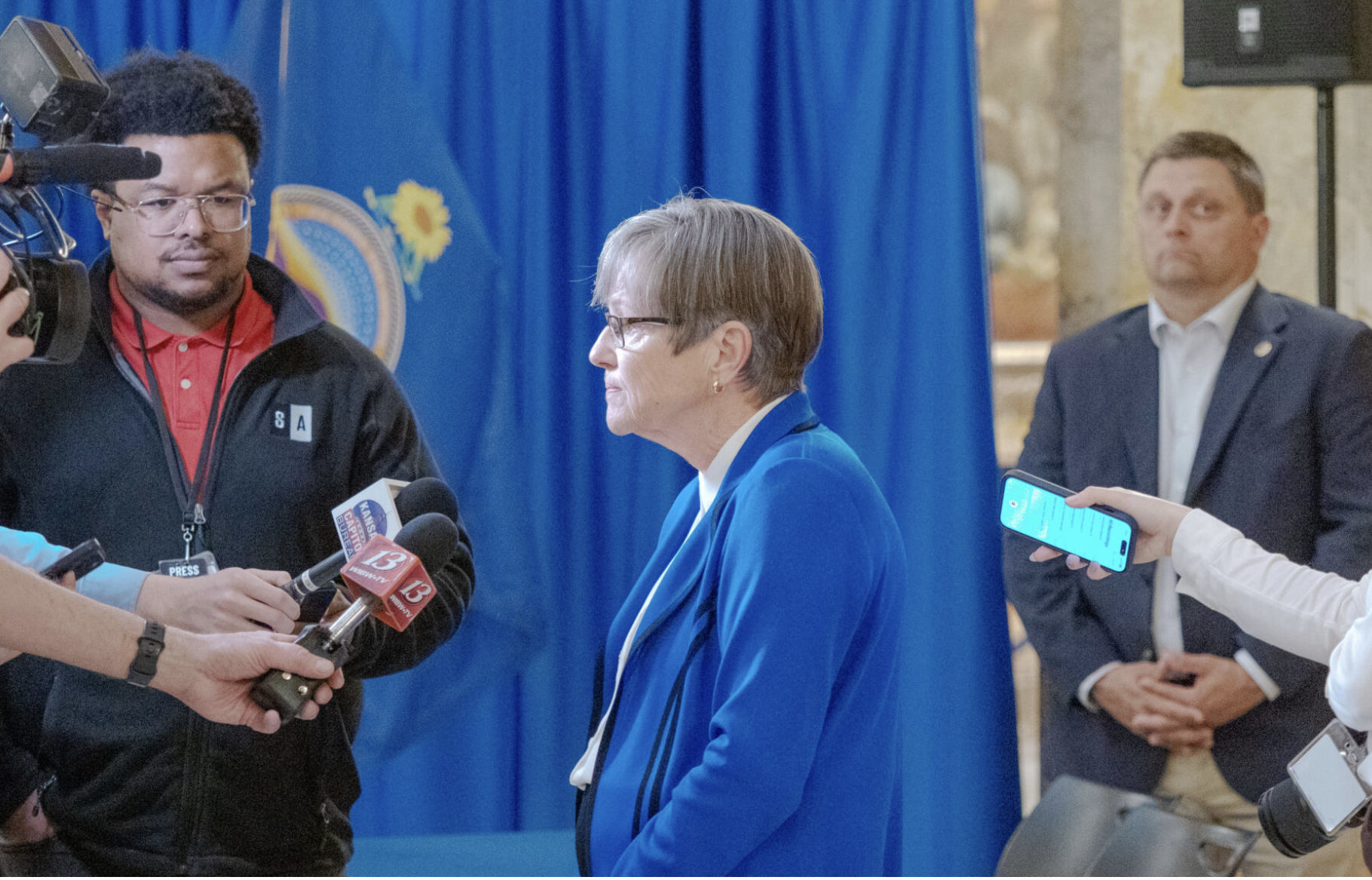
TOPEKA — Gov. Laura Kelly vetoed a bill approved by the Kansas Legislature to maneuver around medical objections and legal challenges to state mandates that patients be provided abortion information layered with junk science.
She vetoed a second bill that could make it easier for women who had an abortion to sue abortion doctors or clinics.
The bills, touted by the lobbying organization Kansans for Life, passed the House and Senate by veto-proof margins and could be the subject of veto override attempts as soon as Thursday, when the Legislature is scheduled to reconvene and close out the 2026 session.
Under House Bill 2729, physicians would be expected to provide patients seeking abortion services with information provided by the Kansas Department of Health and Environment. KDHE’s packet would address informed consent, risks of abortion and the debunked theory of “abortion reversal.” That refers to an experimental treatment that anti-abortion activists contend could stop a drug-induced abortion after administration of mifepristone but before deployment of its companion misoprostol.
While opponents of abortion rights claimed limited success in disrupting the abortion process, the American College of Obstetricians and Gynecologists declared the approach unsafe and unproven.
“This bill requires the state to put false medical information out that has no scientific basis and only serves to mislead women,” Kelly said. “Kansans have made it clear that they want the government to stay out of women’s private health care decisions. This bill does the opposite.”
The governor’s point about public opinion referenced the August 2022 statewide vote in which Kansans rejected a proposed amendment to the Kansas Constitution that would nullify a Kansas Supreme Court decision on abortion. The state’s highest court decided the state’s Bill of Rights included the fundamental right to end a pregnancy.
Get ready for overrides
Kelly also vetoed House Bill 2727, which would amend the Woman’s Right to Know Act. There is a pending lawsuit challenging constitutionality of the state law adopted nearly 30 years ago and repeatedly tweaked. This new bill was designed to improve opportunities for women to prevail in lawsuits alleging violation of state law on informed consent tied to abortion.
The bill would limit a plaintiff’s financial award to $5,000 but allow for reimbursement of abortion expenses and coverage of attorney fees. The key to the bill was a provision permitting the lawsuits to proceed without first making its way through the state’s medical malpractice screening process.
“Kansans have made it clear that they want the government to stay out of women’s private health care decisions,” the governor said. “This bill is another attempt by politicians to involve themselves in these private decisions, this time by trying to intimidate health care providers. At some point, I hope the politicians in Topeka will recognize that Kansans want them out of their doctors’ offices, but until they do, I’ll continue to veto bills like this.”
House Speaker Dan Hawkins, a Wichita Republican seeking statewide office as insurance commissioner, said the vetoed bills were intended to make certain women had access to accurate state-issued information on abortion and could take abortion providers to court “without unnecessary procedural hurdles.”
He said House Republicans would override the vetoes after returning to Topeka to wrap up the annual legislative session.
“These measures simply reinforce that informed consent should actually mean something and women deserve to know their options, understand the risks and have a clear path to seek accountability if those standards are ignored,” Hawkins said. “That shouldn’t be controversial.”
In March, the Legislature overrode Kelly’s veto of House Bill 2635, which offered new protections for state-financed centers advising women on how to avoid abortion.
The pros and cons
The Legislature voted 31-9 in the Senate and 87-37 in the House on HB 2727, the legislation easing legal hurdles for plaintiffs suing abortion providers.
Jeanne Gawdun, director of government relations with Kansans for Life, said the Woman’s Right to Know Act was necessary because clinics had a financial interest in performing abortions.
“HB 2727 ensures that if an abortionist cuts corners on informed consent, there are real consequences,” she said.
Amrita Seehra, a physician providing patient care at Comprehensive Health of Planned Parenthood Great Plains, said the bill would selectively render malpractice screening panels inapplicable in abortion lawsuits. The medical panels were introduced in the 1970s in an attempt to control costs, time demands and emotional turmoil in the legal system, she said.
“If every other type of health care is afforded the benefit of a medical review panel as part of Kansas state law, it is frankly unjust and unethical to hold one specific type of care to a different standard than others,” Seehra said.
She said there should be a reckoning when evidence of medical error was demonstrated, but lowering a legal threshold for clinics providing reproductive health care services left workers vulnerable to frivolous lawsuits.
On HB 2729, which tasked KDHE with standardized information provided to women seeking an abortion, the Legislature’s vote was an identical 31-9 in the Senate and 87-37 in the House.
Lucrecia Nold, policy specialist with the Kansas Catholic Conference, said tasking KDHE with preparation of abortion consent forms guaranteed patients received the same information.
“Many women who obtain abortions do so under pressure, without adequate information and later experience profound grief and regret,” Nold said. “Informed consent is not a bureaucratic formality. It is a safeguard for human dignity.”
Taylor Morton, legislative affairs manager for Planned Parenthood Great Plains Votes, said the bill amended the Women’s Right to Know Act but wouldn’t fix weaknesses with information the Legislature wanted to share with women in Kansas.
“HB 2729 leaves in place unconstitutional requirements that abortion patients receive inaccurate, state-mandated misinformation prior to receiving care,” Morton said. “Among the most harmful of these requirements is the reversal disclosure, which falsely asserts that a medication abortion may be reversed if the second pill has not been taken. This disclosure is not medically supported.”