



In the past decade, more than 50,000 Missouri women sought abortions in Kansas and Illinois. The rare complications suffered are at the heart of arguments over its safety
By:Anna Spoerre and Kevin Hardy
Missouri Independent
KANSAS CITY — Roughly 1% of the more than 53,000 Missourians who received abortions over the last 10 years in Illinois and Kansas experienced complications, ranging from infection to incomplete abortions to hemorrhaging.
Lawyers for Planned Parenthood and the Missouri Attorney General’s Office are dissecting dozens of Missouri’s Targeted Regulation of Abortion, or TRAP laws, as a judge decides which, if any, should remain in place. The safety of abortion is at the heart of the debate.
As the trial enters its second week on Tuesday in Jackson County, the state is trying to make the case that the potential for complications justifies strict regulations on abortion providers.
“The risks associated with abortion don’t just exist in the abstract,” said Assistant Solicitor General Alexandria Overcash. “Real women, Missouri women have suffered.”
Experts called by Planned Parenthood say that’s not the case. Abortion, they said, presents less risk than many medical procedures, including child birth.
“But there’s nothing like sitting in your patient’s pool of blood as she’s bleeding out four liters of blood to realize that a healthy term pregnancy has a whole hell of a lot of risk,” Dr. Jennifer Smith, an OB-GYN in St. Louis, testified Friday.

Missouri voters approved a constitutional amendment in 2024 overturning the state’s abortion ban and enacting protections for reproductive health care. Planned Parenthood and the ACLU of Missouri quickly filed a lawsuit seeking to repeal abortion regulations it argues now violate the new constitutional amendment. The 10-day trial in the case began last week.
Among the laws being challenged is a requirement that only doctors provide abortions, a ban on prescribing medication abortion through telehealth, facility licensing requirements, admitting privileges and a written transfer agreement at a nearby hospital and a state-approved complication plan for medication abortions.
These regulations eventually halted nearly all access to abortion in Missouri as more and more women seeking to terminate a pregnancy sought care in Illinois and Kansas. By the time Missouri’s abortion ban went into effect in 2022, thousands of Missourians were already leaving the state each year to end their pregnancies.
The Missouri Attorney General’s Office is seeking to access records for patients who traveled to Planned Parenthood clinics in Illinois and Kansas for abortions and experienced a complication.
In December, the state tried to impose sanctions to force Planned Parenthood to turn over these patient complication reports. Planned Parenthood refused, saying the records would violate patient privacy. A separate judge intervened, ordering the clinics to only turn over a summary chart outlining the complications. The state is appealing this decision.
Over the past decade, nearly 29,000 Missourians had abortions at Planned Parenthood clinics in Kansas City, Kansas, Overland Park, and Pittsburg, Emily Wales, president and CEO of Planned Parenthood Great Plains, testified Tuesday. Of 28,764 who had abortions between 2015 and 2024, 248 had complications as defined by the state, bringing the complication rate to .86%, according to data later provided by Planned Parenthood to The Independent.
“We are significantly better when it comes to complication rates than the national average,” Wales said, noting that the complication rate for Missouri women at each of the three clinics is regularly under 1% and has been for the past decade.
Deputy Solicitor General Peter Donohue asked if some patients had to have follow-up procedures at local hospitals, and if Planned Parenthood Great Plains has advised patients to go to the ER?
Yes, Wales said, but they’ve never had to transport a patient from a clinic to a hospital.
Under state law, Planned Parenthood must report any abortion complications to the health department. But how the health department and how Planned Parenthood defines complications differs.
In 2022, the most recent year Department of Health and Senior Services data is available, 115 complications were reported. Fifty-five involved procedural abortions, which happen in-clinic, and 60 were the result of medication abortions.
Gillian Wilcox, litigation director for the ACLU of Missouri, said state attorneys were misrepresenting the safety of abortions and said the practice doesn’t necessitate special regulations.
“All medical care carries risk of complications. And when you look at it in isolation, you don’t get a full picture,” Wilcox said in an interview. “Because when you get the full picture it is that they are providing thousands of abortions. And the complication rate actually percentage-wise is very low.”
Complications associated with abortion included hemorrhaging, fever, uterine perforation, pregnancy tissue left in the uterus, cervical lacerations, incomplete abortion and failed abortion.
The latter, which is a circumstance where the abortion doesn’t work and the pregnancy continues, is not generally considered a complication, but rather a possible outcome, Dr. Daniel Grossman, director of Advancing New Standards in Reproductive Health based at the University of California-San Francisco, testified Tuesday.
State-mandated complication reporting requirements “create the impression that abortion is riskier than it really is,” said Grossman, who is a liaison to Planned Parenthood’s National Medical Committee.
Missouri is one of 27 states that requires providers to submit complication reports.
Grossman pointed to a section on the complication report marked “death.”
Bleeding and cramping are expected side effects of both medication and procedural abortions. Hemorrhaging and infection are among the rare complications.
Since mifepristone was approved for use in medication abortions 28 years ago, 32 deaths have been associated with its use, according to the Federal Drug Administration. The FDA evaluated data from 5.9 million women who took mifepristone between 2000 and 2022. Of the three dozen deaths, 11 were the result of sepsis, 20 were homicides and two were suicides.
Ingrid Skop, an OB-GYN in Texas and a board member at the anti-abortion Charlotte Lozier Institute, was called to testify Friday by the Attorney General’s Office. She has treated dozens of women for abortion complications, Skop said, and she believes national data is lacking.
“It appears safer than it actually is,” she said.
That’s because abortion clinics are not generally mandated to report complications, Skop said.
Complications can happen after women leave clinics, and women presenting in hospital emergency rooms do not always tell doctors about their abortions. Skop said abortion providers do little follow up, unlike a routine doctor that has built a relationship with their patients.
“The assumption seems to be no news is good news,” she said of abortion providers who may not hear from patients after procedural or medication abortions.
On cross examination, a plaintiff’s attorney noted that Skop has never performed abortions and disagrees with mainstream medical associations like the American Medical Association and the American College of Obstetricians & Gynecologists. Skop was also questioned about the fact that several of her articles were retracted for methodology issues from peer-reviewed journals, though she maintained those were politically motivated moves.
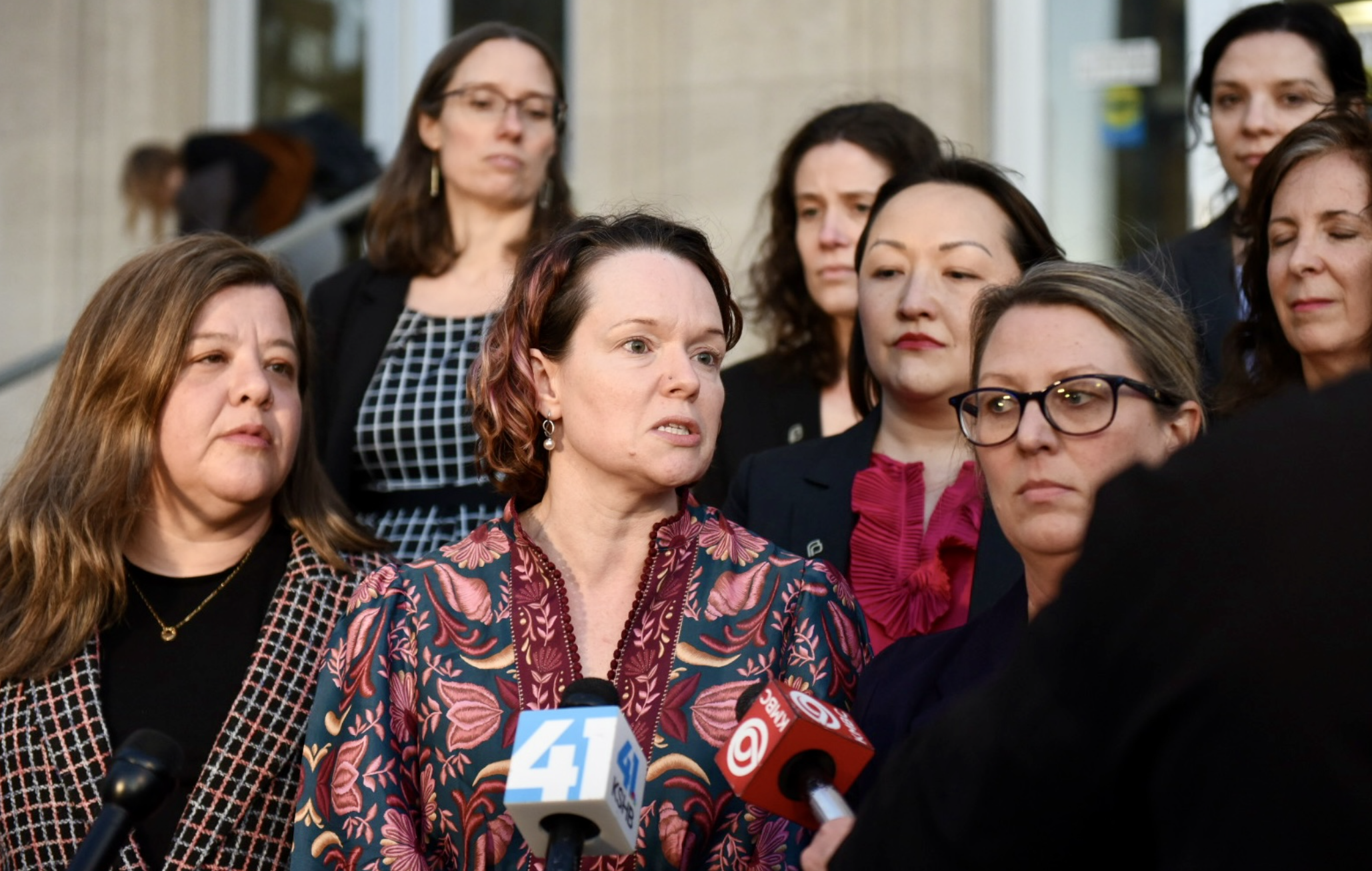
On Thursday, Overcash questioned Margot Riphagan, Planned Parenthood Great Rivers president and CEO, extensively about complications.
Overcash entered into evidence a spreadsheet summarizing complications reported among the nearly 24,000 Missourians who traveled to Planned Parenthood’s clinic in Fairview Heights for abortions in the last decade. Planned Parenthood later told The Independent there were 418 complications among 24,350 Missourians at the clinic between 2015 and 2024, or a 1.72% complication rate as defined by the state.
Overcash then highlighted nine instances of ectopic pregnancies, a dangerous condition in which a fertilized egg grows outside the uterus that, if left untreated, can lead to death.
Doctors testifying on behalf of Planned Parenthood said taking mifepristone doesn’t increase a patient’s risk of dying from an ectopic pregnancy. The symptoms of an ectopic pregnancy, including abdominal pain, would disqualify someone from being able to be prescribed medication abortion without first seeing a doctor in-person.
Two people over three decades have died from ruptured ectopic pregnancies after taking mifepristone, according to the FDA. The FDA reported an additional 95 cases of mifepristone taken during an ectopic pregnancy. The patients were hospitalized in a majority of those cases.
Overcash also pointed to several cases documenting failed or incomplete abortions in which the patient later chose to stay pregnant.
“So once again, a woman decided to continue her pregnancy?” she asked.
“It’s critical that women make decisions about their own bodies, yes” Riphagan responded.
Missouri Attorney General Catherine Hanaway, who was appointed to the job in September, made her first appearance at the trial Thursday afternoon.
“There are real concerns about the safety for women if these treatments are not medically supervised in the appropriate way,” she told The Independent.
Asked whether the state viewed abortion as unsafe Hanaway said: “Remember, we all have a job, which is to represent the state. And these are the laws that were adopted by the state, and we’re defending them.”