


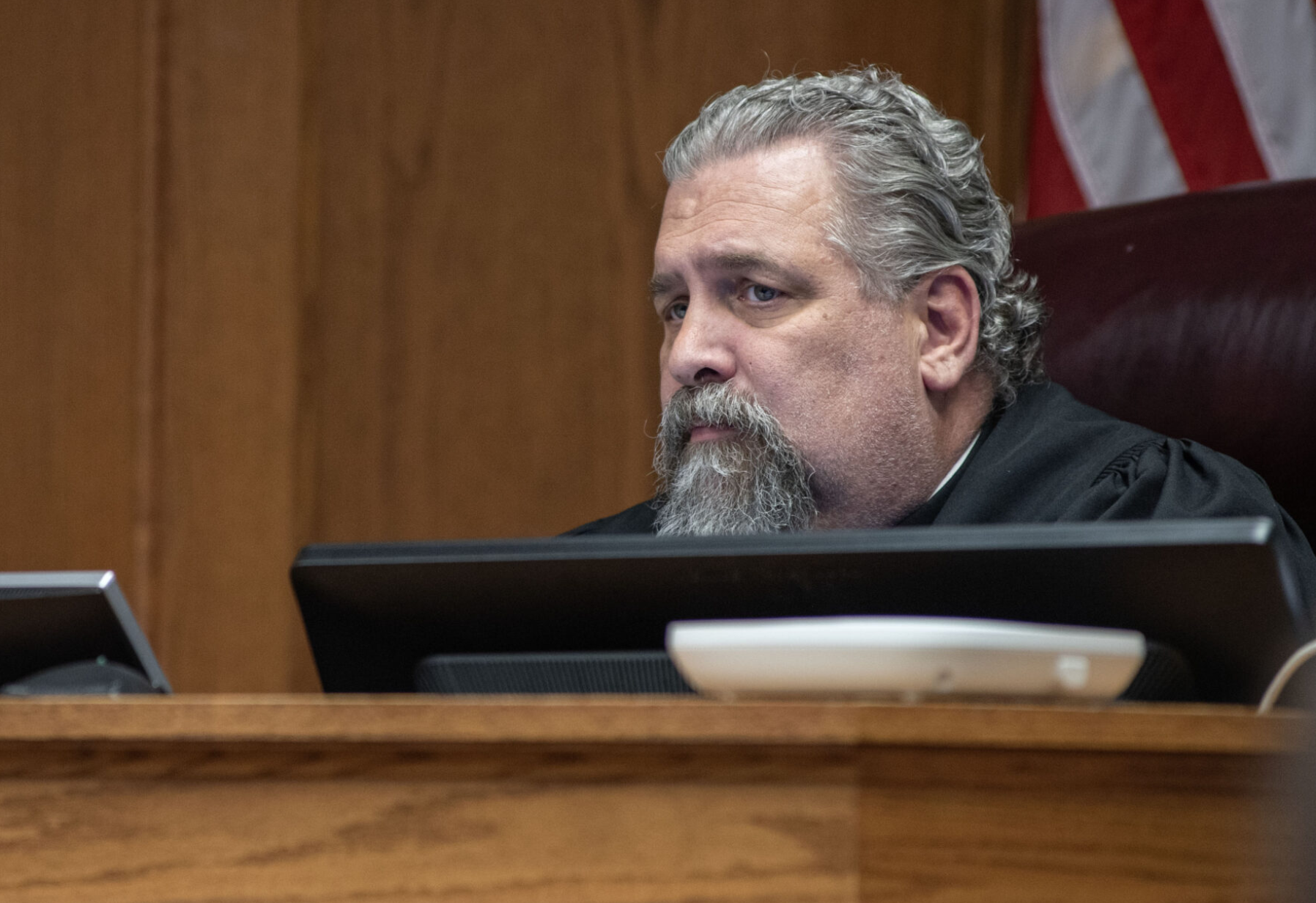
Cole County Circuit Judge Brian Stumpe dismissed the challenge as lacking standing but also ruled that the case was premature because no decision on whether the petition has enough signatures has been issued
BY: RUDI KELLER
Missouri Independent
Submitting signatures to force a referendum on a state law is not enough to suspend a new state law, a Cole County judge ruled Friday in a decision that means Missouri’s gerrymandered congressional map is in effect.
The referendum petition submitted by the political action committee People Not Politicians could still put the law on hold until a November vote, Circuit Judge Brian Stumpe ruled, but not until the signature verification process is complete.
“The constitutional threshold would be rendered meaningless if automatic suspension occurred based on mere physical delivery of petition boxes, regardless of actual signature sufficiency,” Stumpe wrote in his 18-page ruling.
Stumpe’s decision is the latest legal defeat for opponents of the congressional district map passed in a special session last year. Previous rulings have held that Gov. Mike Kehoe had authority to call lawmakers into session, that the Legislature has the power to revise congressional district lines at any time and that the maps pass constitutional muster in the way they are drawn.
In the case decided Friday, the ACLU of Missouri asked Stumpe to rule that the submission of 300,000 signatures on Dec. 9 triggered a provision of the Missouri Constitution that states laws subject to referendums “shall take effect when approved by a majority of the votes cast thereon, and not otherwise.”
The law enacting the new districts was set to go into effect Dec. 11 and Secretary of State Denny Hoskins said that until the signatures were checked, the constitutional provision did not apply.
In a statement issued Friday, the ACLU of Missouri vowed to appeal the decision.
“This order defies over a century of judicial precedent while rendering Missourians’ constitutional right to the referendum process second to the will of politicians,” the statement read. “The ACLU of Missouri is committed to our state constitution’s founding principle that all power is derived from the people, not loaned from the government.”
In all past referendums, going back more than 100 years, submission of signatures has been enough to suspend the law.
The last time Missourians petitioned successfully for a referendum was 2017, when legislators passed a bill implementing the anti-union right to work law. When signatures were submitted, then-Secretary of State Jay Ashcroft, a Republican. issued a statement that the law would not take effect until the signatures had been checked.
A 1914 ruling cited by plaintiffs doesn’t apply because there was no signature verification process required at that time, Stumpe noted in his ruling.
In a statement, Hoskins praised the ruling.
“I appreciate the court’s clarity and leadership in confirming that the Missouri FIRST Map remains in effect,” Hoskins said. “Clear guidance helps ensure Missouri’s election processes continue to move forward in an orderly, transparent, and lawful manner.”
In his decision, Stumpe ruled that the individual plaintiffs represented by the ACLU did not have standing, or the right to sue, over Hoskins’ decision. They have no interest in the petition beyond signing it and wanting to see it on the ballot, he noted.
“The action of signing a petition, in and of itself, does not create a sufficient interest for the purpose of standing,” Stumpe wrote.
There are other legal standards that were not met by the plaintiffs, Stumpe wrote. The issue was not ready for the courts, he wrote, because Hoskins has not ruled on whether there are or are not enough signatures to make the ballot.
Under state law, local election authorities have until July 28 to finish checking the signatures and Hoskins has a week after that deadline to determine if the petition has enough signatures to make the ballot. The primary election this year is Aug. 4, but ballots must be finalized by June 9.
Stumpe wrote that he was being asked to rule on a political question outside the court’s authority.
“Plaintiffs seek to bypass the entire administrative process and obtain a premature judicial declaration before the administrative process has run its course,” Stumpe wrote.
Signature verification is an important check to prevent bogus referendum petitions, Stumpe wrote.
“Without verification requirements, any group could suspend legislation merely by submitting boxes of invalid signatures, signatures of unregistered voters, forged names or other fraudulent submissions,” he wrote.
Under pressure from President Donald Trump Missouri Republicans forced the map to passage by changing state Senate rules and shutting off debate to prevent a filibuster. The map puts a target on U.S. Rep. Emanuel Cleaver, a Kansas City Democrat, by expanding his 5th Congressional District from its boundaries in Jackson and Clay counties to take in areas along the Missouri River to Columbia.
So far, six Republicans have filed for the nomination to oppose Cleaver. If he is defeated and there are no changes in the party controlling other districts, Missouri would be represented in the U.S. House by seven Republicans and one Democrat.
Stumpe’s ruling could trigger a rush of new filings before Tuesday, the deadline for seeking office by filing with an established political party. The final days of filing are already going to be watched closely because 6th District U.S. Rep. Sam Graves, a Republican from Tarkio, decided this week he would not run for a 14th term.
People Not Politicians is not a party to the case decided Friday. In a statement, they said the decision is not the final word on whether the new map will be used this year.
Using the Missouri Sunshine Law, People Not Politicians has monitored the signature verification process and local election authorities have reported enough signatures are valid — equal to 5% of the vote for governor in 2024 in six of the state’s eight districts — to make the ballot.
“More than 305,000 Missourians have already demanded a vote, the Constitution is on the side of voters, and no single ruling can override the right of the people to decide their own representation, Richard von Glahn, executive director of People Not Politicians, said in a prepared statement. “This fight is far from over, and voters will ultimately have the final say.”