


By: Anna Kaminski
Kansas Reflector
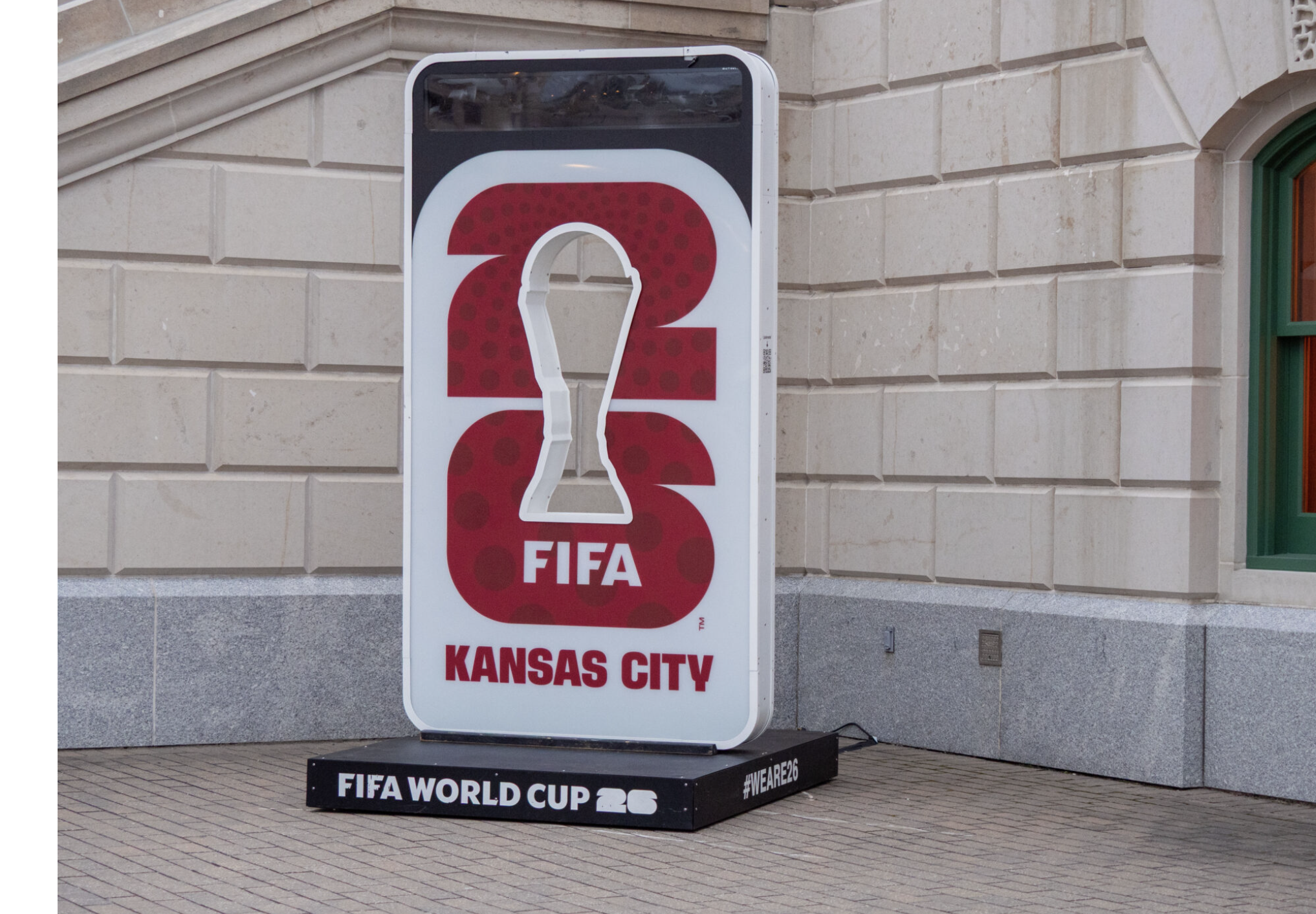
TOPEKA — An estimated 650,000 visitors will flood the Kansas City area over the course of the monthlong FIFA World Cup, which chose Kansas and Missouri as the home for four teams and at least six matches.
The event catalyzed a major transportation expansion, created temporary diplomatic offices and established dedicated health care infrastructure to support Kansas City visitors. The area is one of 11 American host cities for the North American tournament.
The first match between Mexico and South Africa begins Thursday in Mexico City. Kansas City’s first match is scheduled for June 16 at Arrowhead Stadium in Kansas City, Missouri, between Argentina and Algeria, both of which will be based in the Kansas City area for the tournament’s duration, along with the teams from Netherlands and England.
KC2026, the area’s nonprofit World Cup planning organization, estimated Kansas City could see more than $650 million in economic activity.
As home to the tournament’s smallest host city, the states of Kansas and Missouri and local governments will be looking to recoup $111 million in public investments dedicated to the tournament. Combined with federal funds, almost $200 million in public money has laid the foundation for the 2026 World Cup in Kansas City.
Salma Aouam, a former Fulbright Scholar and graduate student at Kansas State University, said the Kansas City area has the opportunity to capitalize on the predicted tourism influx by promoting surrounding attractions beyond the World Cup.
“They’ll visit national parks in Arkansas, visit bison farms in Missouri and hike prairies in Kansas. They’ll experience that classic version of Midwest America, and it’s something they’ll remember long after the tournament,” Aouam said on June 4, citing her graduate research, which examined the effect of major sporting events on urban mobility.
KC2026 brought in 200 new buses to create three new bus service systems: A regional service that will connect riders to area attractions, a stadium service that will act as match-day transportation for ticket holders, and an airport service that runs between the Kansas City International Airport and downtown Kansas City every 15 minutes.
The bus systems exist on top of existing bus, car and streetcar transportation. Aouam said the expanded park-and-ride bus options should be implemented long term, if they prove successful. She encouraged KC2026 to continue its work after the tournament to provide long-lasting transportation solutions to the region.
“All of these are big ‘ifs,’” Aouam said. “We may see a lot of confusion when international tourists land in Kansas City for the World Cup and find out they can’t walk to the stadium, like they might in other big cities or in their home countries.”
The planning committee established in Overland Park a Consular Services Center, which provides temporary diplomatic and citizen support services for Algeria, Argentina, Austria, Ecuador and Netherlands and Curaçao. The countries’ governments expect the World Cup to draw “significant numbers of visitors” to the Kansas City area, according to the committee.
Algeria, Argentina, England and Netherlands have base camps in the Kansas City area.
The consulates will be located at the Overland Park Convention Center. They are equipped to help with emergency passports and travel documents, citizen registration, welfare checks and coordination during legal or medical emergencies, according to the committee.
“Providing direct access to consular support services helps ensure visitors feel informed, supported and connected while they are here in our region,” said Pam Kramer, CEO of KC2026.
The University of Kansas Health System is the designated medical provider for the World Cup, offering first aid and medical care planning.
Leading up to kickoff, the health system has published a series of short, informational videos under the banner “Before the First Kick” discussing firework and burn injuries, mass casualty events, heat illness, and the difference between urgent care and emergency care.
U.S. Rep. Sharice Davids, a Democrat representing a Kansas City-area congressional district, delivered remarks Monday on the U.S. House floor, commemorating the start to the tournament.
“The matches will bring excitement, visitors and economic opportunity to the Kansas City metro area. And the impact won’t end when the final whistle blows,” Davids said. “The investments we’ve made in infrastructure, transportation, safety, and community development will benefit Kansas City and our surrounding communities for generations to come.”
Davids founded the Congressional FIFA World Cup 2026 Caucus, which helped lead federal preparations. The federal government allocated $625 million to the country’s host cities for safety and security costs and $100 million for transit operations. Her office estimated the tournament will generate 185,000 jobs and $17.2 billion in GDP.
But that depends on visitors actually arriving, staying and spending the projected amount of money in host cities.
A May report from the American Hotel and Lodging Association that surveyed hoteliers across the country warned of hotel bookings trailing expectations.
Between 85 and 90% of Kansas City-area respondents reported bookings were below expectations, falling short of a typical June or July without any major events, the report said.