


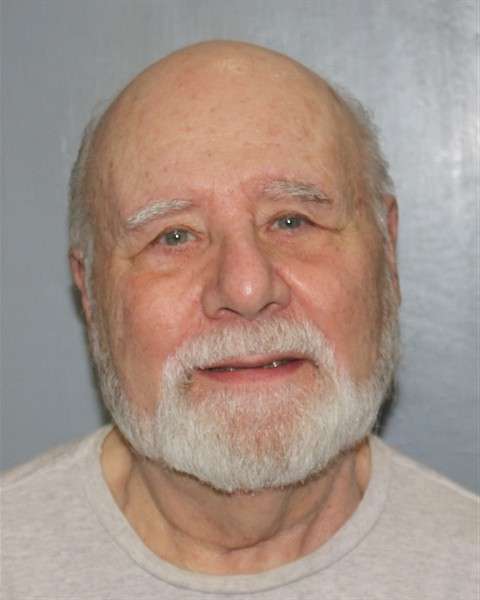
TOPEKA, Kan. — Kansas Governor Laura Kelly announced this week that she denied a clemency request from convicted serial killer John Robinson, keeping his death sentence in place, according to a media release from Kelly's office.
Robinson was convicted in a series of murders involving women in Kansas and Missouri between the mid-1980s and 2000. Investigators discovered the remains of several victims concealed in barrels at a storage facility in Raytown, Missouri, and on Robinson’s property in Linn County, Kansas.
Authorities said Robinson lured victims through false job offers and other schemes before killing them.
In Kansas, Robinson was convicted in Johnson County of aggravated kidnapping, two counts of capital murder and other crimes. He was sentenced to death on Jan. 21, 2003
Statement From Attorney for John E. Robinson, Sr. Regarding Denial of Clemency by Governor Kelly
Mr. Robinson is almost 83 years old and has an exemplary prison disciplinary record. His case is pending before the state supreme court on a post-conviction appeal. It will likely be many years before his appeals are resolved and an execution date could be set.
Below is a Statement from Madeline Cohen, Attorney for Mr. Robinson:
“John Robinson is almost 83 years old, one of the oldest death row prisoners in America. Given his age, his medical condition, and his ongoing legal proceedings, it is nearly certain that he will die of natural causes before Kansas is in a position to execute him. By denying him clemency, Governor Kelly has ensured that the State must continue to waste vast resources defending his death sentence instead of resolving the case with a sentence of life without parole.”
“Moreover, given the many egregious errors in Mr. Robinson’s case, including being represented by lawyers who did virtually no investigation in preparation for his trial, there is every possibility that the courts will overturn his death sentence.”
Background on the Kansas Death Penalty from Attorney for Mr. Robinson:
Since Kansas reinstated the death penalty in 1994, its use has continued to reflect the state’s historic lack of support for capital punishment. Kansas last executed a person in 1965, and no Kansas jury has imposed a death sentence since 2016.
Studies have consistently shown that the death penalty does not deter crime and fails to improve public safety. In fact, murder rates are lower in states without the death penalty than in those that retain it.
Despite that lack of public-safety benefit, the Kansas death penalty drains enormous public. As of 2018, the additional legal proceedings required solely for death penalty cases was costing Kansas taxpayers over $2.1 million per year.[1] Between 1994 and 2018 the extra costs of Kansas’ death penalty were over $23.5 million.[2]
Since 2018, the costs have continued to rise. In FY 2024, the State Board of Indigent Defense Services alone spent $6.3 million on capital defense—more than double its 2018 total.[3] In Kansas, a trial in a case seeking the death penalty costs three to four times more than jury trials for comparable crimes where the death penalty was never sought. Even cases resolved by plea are twice as costly when the death penalty was initially sought. Between 2004 and 2011, the first 14 cases where the state sought the death penalty had required $1.9 million in additional postconviction costs, whereas comparable cases where the death penalty was not sought cost only $362 per case during that period.[4]
Kansas’s death penalty also reflects the arbitrariness and unfairness that have undermined Americans’ support for capital punishment. According to the annual Gallup poll. Just as in Kansas, Americans are reluctant to impose new death sentences, with 2025 becoming the sixth straight year in which fewer than 30 new death sentences were imposed nationwide. It has been a decade since America sentenced more than 50 people to death in a single year.
National studies have repeatedly shown that racial bias influences death sentencing. Kansas is no exception. Kansas has never imposed a death sentence for the killing of a Black man, despite Black men comprising approximately 30% of Kansas’ homicide victims.[5] Prosecutors in Kansas are 3.4 times more likely to file capital charges, 3.9 times more likely to file notices to seek the death penalty, and 8.6 times more likely to seek and obtain a sentence of death in cases with a Black defendant and white victim than in cases with a Black defendant and Black victim.[6]
Arbitrary geographical differences influence Kansas death sentencing as well. The rates of capital charging, death noticing, and sentencing in Kansas counties are not consistent with the homicide rates in those counties. Of the 15 death sentences in Kansas post-1994, 6 were imposed in Sedgwick County alone. And while prosecutors claim they need the threat of the death penalty to secure guilty pleas—a practice that raises serious ethical concerns—the reality is that in the cases of at least 5 of the 9 men on death row today, prosecutors rejected the defendant’s formal or informal offer to plead guilty in exchange for a life sentence.
Robinson is one of nine inmates currently on death row in Kansas.