


By BRENT MARTIN
St. Joseph Post
Dry weather might have pushed concerns about flooding along the Missouri River onto the back burner, but some river observers don’t want federal officials to lose focus on the issue.
Missouri Levee and Drainage District Association chair, Tom Waters of Orrick, says efforts to upgrade flood control along the Missouri took a big step forward when R. D. James, who is from the Bootheel of Missouri, became Assistant Secretary of the Army for Civil Works.
“He brought a lot of focus on flood control and we saw a lot of improvements to our levee systems and the whole direction that the Corps takes,” Waters tells KFEQ/St. Joseph Post. “With the new administration, the jury’s still kind of out on how they’re going to follow through.”
A prolonged drought in the upper Missouri River basin has ended any worries about flooding this year and likely into next. The U. S. Army Corps of Engineers has lowered water releases from the six upstream Missouri River reservoirs. Outflows have dropped so drastically from Gavins Point Dam that the level of the Missouri River has dropped a full foot.
The Corps has scheduled the navigation season to end three days early. Worries about flooding along the Missouri River have been replaced by worries about a shorter navigation season and whether utilities and municipal water companies will have adequate water to operate.
Still, Waters says though it’s dry now, memories of the 2019 flood remain vivid.
“It’s been an easy year here for me, because we haven’t had any flooding and the weather and the river have cooperated,” Waters says. “We’ll see how the newer administration handles these emergencies. It floods everyday somewhere in the United States.”
Waters says no one will know how President Joe Biden’s administration will respond until the nation experiences flooding once again.
Now, though, is the time to prepare.
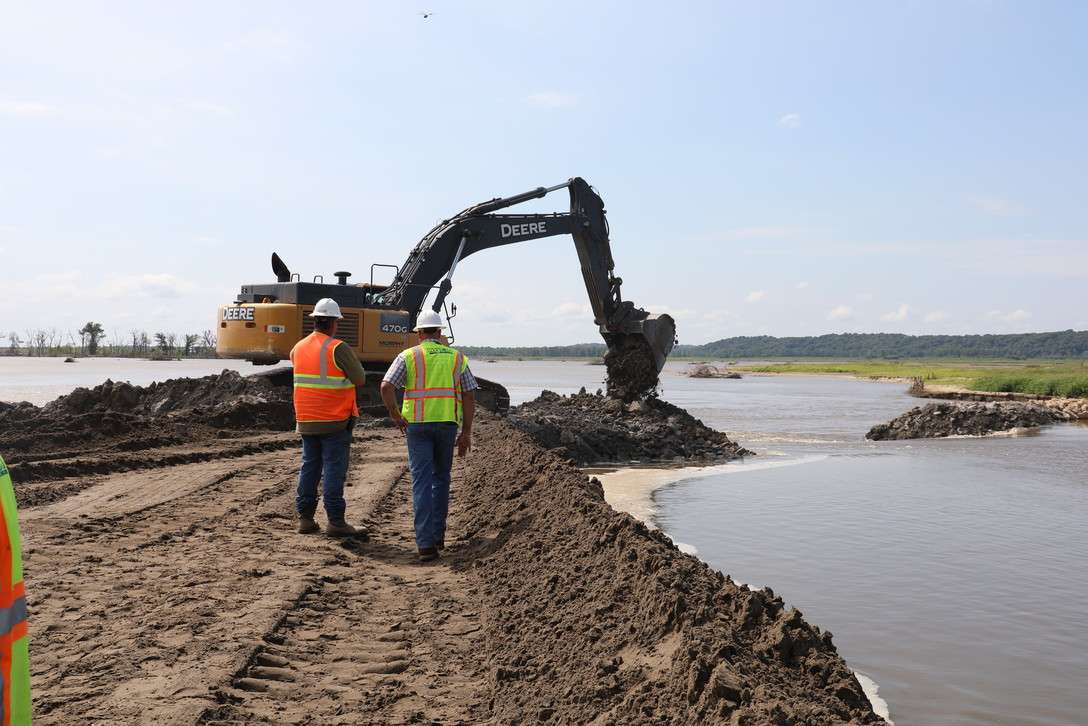
Waters says his group and others want to keep pressure on the Corps of Engineers to repair levees broken by the 2019 flood and make upgrades to lessen flood risks in the future. Waters says it is important Missouri officials work with their counterparts in Kansas, Nebraska, and Iowa to see upgrades are made.
“When we get those four states and get eight senators and all the representatives pushing for new improvements to our levee system, our flood control system, it makes a huge difference,” according to Waters. “That’s what we’ve seen since the 2019 flood. The governors of those states have joined together; the senators, the representatives.”
The 2019 flood destroyed many of the levees along the Missouri River, flooding homes, businesses, and farms. The flood caused billions of dollars in damage. While most levees have been repaired, a few remain broken.