


KELSEY STREMEL
Kansas State University - College of Agriculture
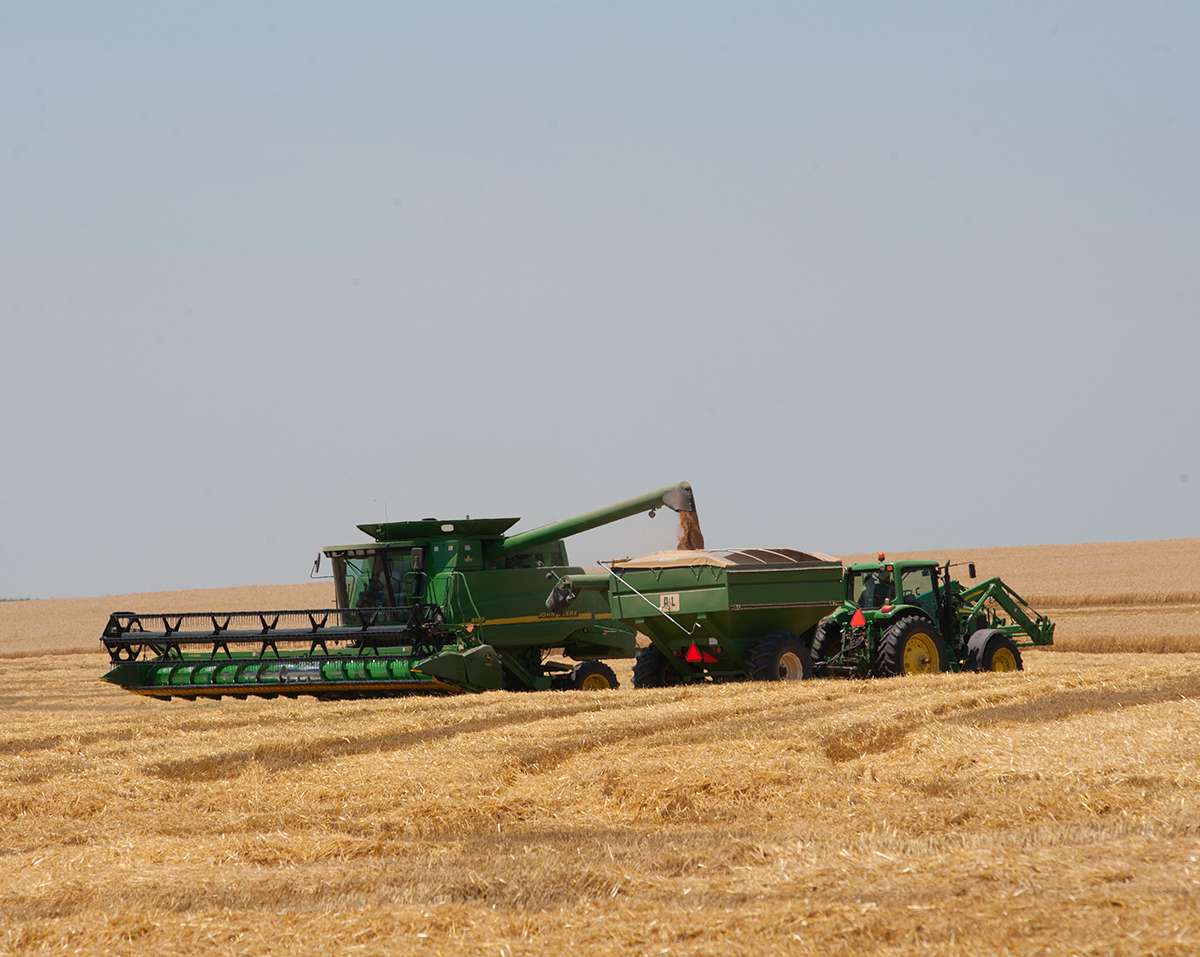
Most High Plains wheat fields sit idle until the next planting season, but research from a multistate collaboration suggests those acres could offer valuable livestock grazing opportunities — if producers are willing to navigate the region’s volatile weather and limited moisture.
“Disrupting good wheat stubble always deserves careful consideration, but when the moisture outlook is favorable, it can do more than sit idle; it can support livestock and protect the soil with the addition of cover crops,” said Sandy Johnson, K-State Extension beef specialist and contributor to "Cover Crops Grown Post-Wheat for Forages Under Dryland Conditions in the High Plains."
The fact sheet was developed by extension specialists and researchers from Kansas State University, Colorado State University and the University of Nebraska.
The study outlines how post-wheat cover crops can add grazing windows and improve soil health in dryland systems. Planting immediately after wheat harvest provides the best chance for growth by tapping into residual soil moisture.
Warm-season species such as sorghum-sudangrass, millets and sunflowers perform best for late summer and fall grazing. Cool-season grasses — like triticale, barley and cereal rye — are better suited for fall-through-spring grazing, as they can survive winter and provide early-season forage when native pastures haven’t yet greened up.

Producers must also manage such risks as plant toxicities. Sorghum species and other warm-season crops can accumulate nitrates or prussic acid, especially during drought or after frost events. These compounds can be dangerous to livestock if not managed properly.
“Testing forage before turnout and delaying grazing after a frost are two important risk management steps,” Johnson said.
Even with good management, forage yield remains highly variable. Trials across Kansas, Colorado and Nebraska showed yields ranging from 500 to 2,300 pounds per acre. In southwest Kansas, forage sorghum after wheat averaged 5,600 pounds per acre over seven years, but yearly yields ranged from as little as 1,100 to nearly 9,000 pounds per acre depending on rainfall.
While diverse cover crop mixes of six or more species are sometimes promoted for soil health, the study found they may not produce the most forage. For grazing-focused systems, simpler mixtures or single-species plantings were often more productive and cost-effective.
“Flexibility is key,” Johnson said. “Producers who can adjust herd size or grazing days based on forage availability are in the best position to benefit. But in dry years, the best decision may be to skip grazing altogether to protect ground cover.”
Quick facts about post-wheat plantings:
- Post-wheat plantings would include warm-season species such as millets, sorghum-sudangrass, forage sorghum, sudangrass, cowpea, lablab, sunhemp, or sunflowers.
- Planting a cover crop for forage could be grazed late summer through fall.
- Warm-season grasses tend to dominate over broadleaf species when planting cover crop mixtures.
- Cover crops must be planted immediately after wheat harvest to ensure crop establishment before the soil dries out following harvest.
- Yield variability is high when growing cover crops post-wheat under dryland conditions, ranging from under 1,000 lb/ac in dry years to almost 9,000 lb/ac in wet years
- Stocking rates must be flexible because of the large year-to-year variability in cover crop productivity.
- Cover crops planted post-wheat can provide an average of 30 to 45 days of grazing, but the timing of grazing in relation to frost is an important consideration.
- Take caution for prussic acid and nitrates when growing summer cover crops for forage.
- Be aware of volunteer wheat growing in summer cover crops and manage accordingly for risk of disease and insect pressure carrying over to wheat planted this fall.
About the study: The fact sheet was authored by Sandy Johnson, beef cattle systems specialist with K-State Research and Extension; Augustine Obour, professor of soil science at Kansas State University; John Holman, professor of agronomy at Kansas State University; Joe Brummer, associate professor of forage science at Colorado State University; Angie Moore, research associate at Colorado State University; and Meagan Schipanski, associate professor of soil and crop sciences at Colorado State University.