


By: Jason HancockMissouri Independent
Federal prosecutors say Siddharth Jawahar agreed to pay Axiom Strategies $10,000 to secure a favorable newspaper article and a sentencing letter from Sam Graves in an effort to influence the judge
Weeks before a federal judge in St. Louis sentenced Siddharth Jawahar to 11 years in prison for running a $35 million Ponzi scheme, he hired a prominent Missouri political consulting firm to help generate favorable publicity and support for a lighter sentence.
Jawahar’s $10,000 agreement with Axiom Strategies – obtained by federal prosecutors and later filed with the court – called for the firm to help secure favorable media coverage and letters of support. Prosecutors this week said the arrangement showed he had commissioned Axiom founder Jeff Roe to obtain both in an effort to influence the judge.
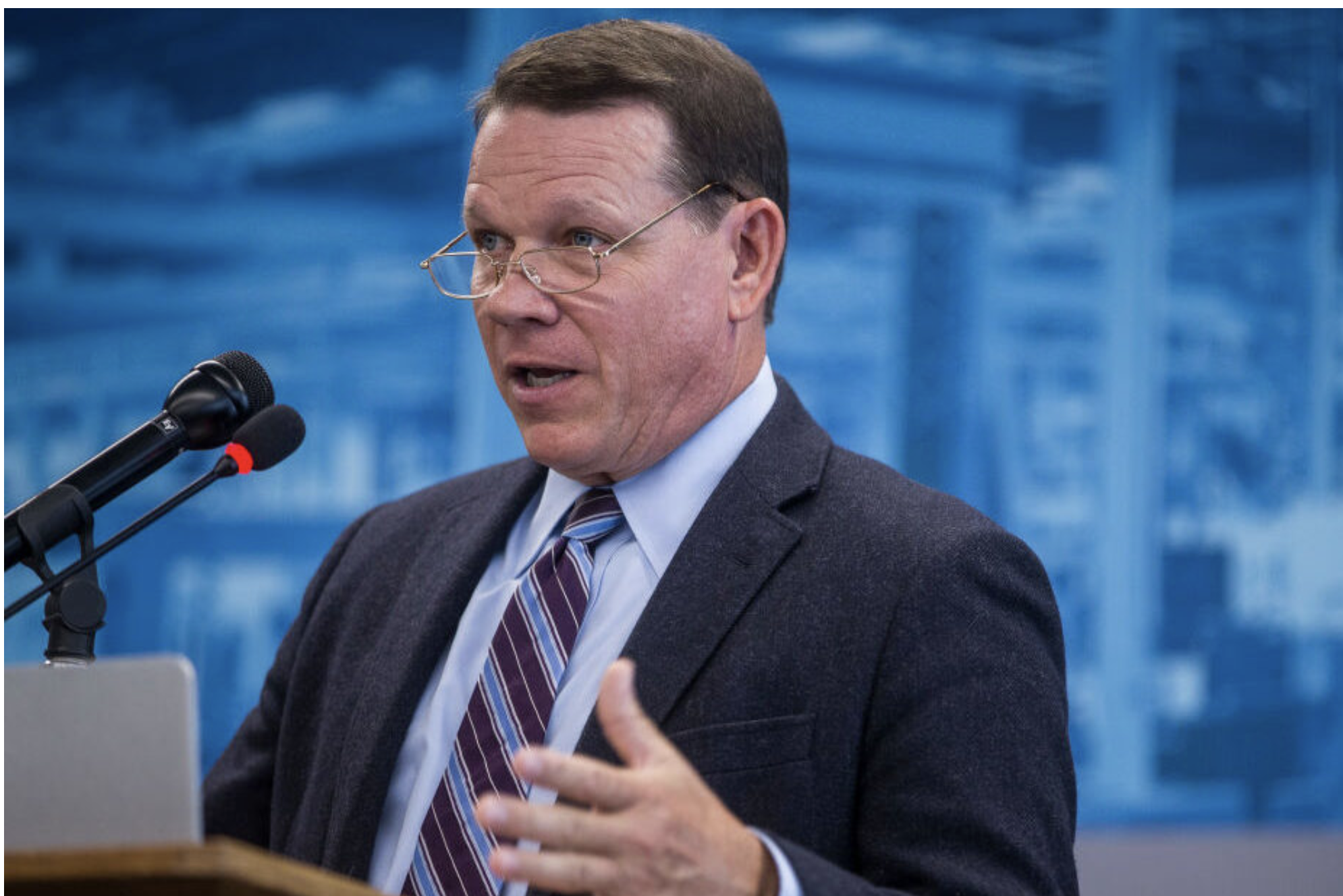
In the days after Jawahar hired Axiom in late August, U.S. Rep. Sam Graves, a Missouri Republican who has worked with Roe since the 1990s, sent the judge a letter urging him to sentence Jawahar to four years in prison.
The letter was signed three days after a recorded jail call in which Jawahar asked Roe for an update on efforts to find a political figure willing to submit a letter on his behalf.
Roe told Jawahar he was “going back and forth with a few” people, according to a transcript of the call obtained by prosecutors. When Jawahar asked whether the letter would come from a state senator, Roe said maybe, “but it’s going to be someone good.”
Prosecutors later described that conversation as Jawahar asking about Roe’s “procurement of the congressman’s letter.”
Neither Roe nor Graves responded to a request for comment for this story.
‘Re-enter society as a productive economic agent’
Graves signed the two-page letter dated Sept. 3 on congressional letterhead, though he wrote that he was acting in his personal capacity.
He told U.S. District Judge Zachary Bluestone that he was familiar with Jawahar’s case through public filings and “direct professional discussions regarding sentencing methodologies in the Eastern District.” Graves did not identify who participated in those discussions or explain how he became involved in the case.
Graves urged Bluestone to impose a total sentence of 48 months, arguing that additional prison time would provide little public-safety benefit and make it more difficult for Jawahar to repay his victims.
Prosecutors later noted that Graves’ letter said Jawahar should have the opportunity to “re-enter society as a productive economic agent,” even though Jawahar is a noncitizen expected to be deported after serving his sentence.
“A 48-month total sentence marks the exact point where the equations of justice balance,” Graves wrote.
The recommendation matched what Jawahar’s attorneys were asking the court to impose.
Roe and Graves have worked together politically since 1994, when Roe joined Graves’ state Senate campaign. Roe later served as Graves’ congressional chief of staff after Graves was elected to the U.S. House in 2000. He founded Kansas City-based Axiom Strategies in 2005, and Graves became one of the firm’s earliest clients.
The Axiom agreement provided to the court by prosecutors called for the firm to provide strategic communications, reputation management, media relations and advocacy. It said Axiom would try to obtain one or two “advocacy-oriented” articles or other media placements and help develop and coordinate one or two support letters for sentencing.
The agreement also contemplated helping Jawahar pursue a presidential pardon or other executive clemency after sentencing, including potential outreach to the White House or the federal Office of the Pardon Attorney, which advises the president on clemency cases.
Jawahar pleaded guilty in January to three counts of wire fraud.
Prosecutors said he took in more than $35 million from investors through his Texas-based company, Swiftarc Capital, between 2016 and 2023, while investing only about $10 million. They said he used money from new investors to pay earlier investors and spent investor money on private jets, luxury hotels, apartments, private clubs and expensive restaurants.
Bluestone sentenced Jawahar on Tuesday to 11 years in prison and ordered him to pay $31.35 million in restitution. The judge cited the size and duration of the fraud and Jawahar’s failure to begin repaying victims.
Newspaper story noted jail program, but not scheme
The effort to secure favorable media coverage also surfaced in court records.
On Aug. 28, days after Jawahar hired Axiom, the Jefferson City News Tribune published a lengthy article portraying Jawahar’s time in jail as a story of rehabilitation.
Prosecutors identified the News Tribune story in their filing and alleged it was the favorable article Jawahar had paid Roe to help get published. They also noted that the article made no mention of the fraud scheme for which Jawahar was awaiting sentencing.
The article wasn’t written by a reporter for the News Tribune. It was written by Jake Kroesen, editor of The Missouri Times, whose owner, Scott Faughn, purchased the News Tribune last year.
Kroesen’s article described Jawahar as creating a “peer-to-peer academic and vocational academy” inside the Ste. Genevieve County jail, three hours away from Jefferson City. Officials at the detention center told a reporter with KMOV-TV that no incarcerated person, including Jawahar, had ever started a program there.
Similar claims appeared in Jawahar’s later sentencing memorandum, which said he spent thousands of hours developing lessons, tutoring detainees for GED tests and mentoring other incarcerated men.
Kroesen did not respond to an email seeking comment, but the News Tribune changed the article Wednesday afternoon to remove several passages. A publisher’s note was added saying references to work Jawahar “may have done while in jail” were removed.
The revised article still retains the broader claims that Jawahar built a “peer-to-peer academic and vocational academy” inside the jail, spent more than 5,000 hours teaching and mentored more than 50 detainees.
During the same Aug. 31 jail call in which Jawahar asked Roe about a support letter, the two discussed the article, which prosecutors identified as the News Tribune story.
According to a transcript of the call provided to the court, Jawahar said his lawyer had suggested waiting until after sentencing to publish the story. Jawahar disagreed, saying that would “defy the purpose” because part of the article’s purpose was “to influence the judge.”
Roe told him the story had already been published.
The two went on to discuss photographs and corrections to the article. Roe proposed spending a few hundred dollars to digitally target the story to Bluestone’s home so the judge would be likely to see it.
Jawahar worried that could appear “overly calculated,” adding, “which of course it is.”
Prosecutors argued that Jawahar’s agreement to pay a political consultant thousands of dollars to influence the court, rather than repay his victims, demonstrated the need for a sentence that would provide adequate deterrence.