


Caseloads have surged in parts of the state, and workers say new policies are making cases harder and slower to resolve
By Steph Quinn
Missouri Independent
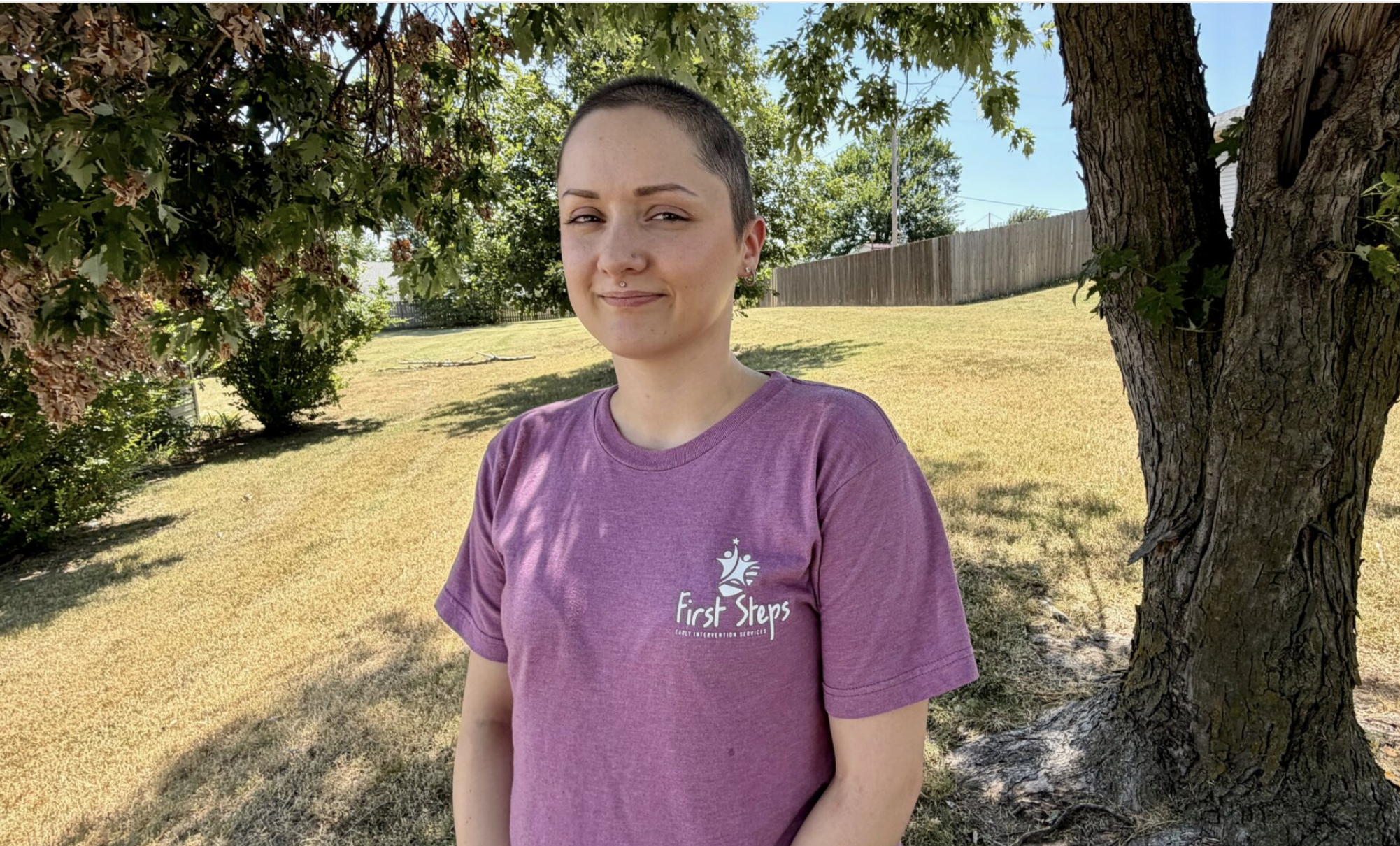
JOPLIN — Ashley Allen had worked almost four years as a child abuse and neglect investigator for the Missouri Children’s Division when she quit in April.
Some days it seemed like the printer in her Jasper County office never stopped churning out reports from the state’s child abuse and neglect hotline, Allen told The Independent. She’d get two or three reports each day — more, if colleagues called out.
Usually, she had 24 hours to verify a child’s safety. For emergencies, she had three. Often, she found herself driving across the county with little information to guide her search.
“I have a list of people to call and things to type, but I just got a three-hour emergency,” Allen said. “I have to run to Reeds to go find a family with no address and no name.”
The thing was, she loved the work. She loved advocating for families, and she “tried to go above and beyond” to work with them to keep kids in their homes when it was safe.
A punishing caseload and intensifying pressure to complete checklists and clear cases made the work overwhelming, Allen said.
The day she quit, Allen said she felt so anxious she “wanted to throw up.”
“It’s those emails, like, ‘Hey, why haven’t you done this yet?’” Allen said. “I’m doing 10 other things, and I don’t feel that case is ready to close yet.”
The division measures its child abuse and neglect caseloads against a goal of no more than 15 open cases per worker at any given time — the same standard used by national organizations like the Child Welfare League of America to accredit state agencies. Allen had more than 30 open cases when she left.
Allen’s caseload is no longer unusual, and in parts of the state it would now count as light.
For most of 2025, data from the Missouri Department of Social Services showed fewer than 10 of the state’s 46 judicial circuits averaged more than 15 open cases per worker at the end of the month. At the end of June this year, workers in 21 of Missouri’s 46 circuits averaged more than 15 open cases, though that number decreased to 13 in July, the most recent month of available data.
Workers in St. Louis County have had the highest average caseloads in the state each month this year. They averaged 89 open cases at the end of June, while St. Louis City workers averaged 55. At the end of July, the county figure had climbed to 97 and the city’s to 58.
As workers juggle more reports, it’s taking them longer to clear cases, prolonging the division’s intervention before a case is closed or referred to the court system.
The number of circuits where the average time to close a report over the past six months exceeded 45 days more than quintupled, from four to 23, between January and July. In St. Louis County, the average case as of the end of July took 144 days, or four and a half months.
State law requires the division to finish investigations within 45 days, and allows more time only when staff document a specific reason — a pending forensic test, a prosecutor’s written certification, a witness who can’t be reached. Even then, the law sets a hard limit: 90 days, or 120 for reports involving sexual abuse. In St. Louis County, the average investigation took 144 days.
Allen said that when workers are spread too thin, it directly impacts children and families.
“You’ve got kids to see that may or may not be unsafe, but you don’t get around to seeing them because of all the other things that you have to do, and it puts some families on the backburner,” Allen said. “And there are kids that are safe where we’re pestering their families.”
Children’s Division Director Sara Smith declined an interview request from The Independent. She also declined to comment on submitted questions about current staff turnover rates, caseloads and efforts to move children in foster care toward reunification or permanent placements, citing a legislative hearing scheduled for Aug. 26 that will cover related topics.
The division has struggled with staffing shortages and high turnover for years. But current and former employees interviewed by The Independent say the latest surge in caseloads is being compounded by something else: new rules and increasingly prescriptive policies that require more steps to move cases forward.
Workers and supervisors said changes introduced over the past year and a half have added layers of consultation, checklists and supervisory review while limiting their discretion in working with families. The result, they said, is that cases take longer to close even as workers are being asked to handle more of them.
Workers ‘do not know which way is up’
In 2020, citing diminished state revenue due to the COVID-19 pandemic, then-Gov. Mike Parson cut 300 state jobs. Of those, 200 were in the Social Services Department. Almost 100 were in the Children’s Division. Former Department of Social Services Acting Director Jennifer Tidball turned down a funding offer from the state Senate to help with staffing.
With fewer investigators, turnover of frontline division staff — including investigators, foster care case managers and hotline workers — reached 55% in fiscal year 2022, and staff in September 2022 told The Independent, “this job is impossible.” The number of backlogged cases statewide surpassed 10,000 by September 2023, with more than 6,000 overdue cases in St. Louis alone.
Lawmakers that year approved funding to add back 100 positions, after former division director Darrell Missey pitched a plan to tamp down caseloads and shift the division’s focus toward preventing kids from going into foster care. By September 2024 the division had cleared 80% of the backlog. At the end of fiscal year 2025, turnover among frontline division staff was 40%.
The backlogs climbed back anyway — and not because the state stopped filling jobs. As of the end of November last year, only 79 positions across the division were vacant. The current state budget this year funds 1,781 field positions, which is the same as last year.
Frontline staff interviewed by The Independent point to policy changes enacted over the last year and a half as a major reason cases are taking longer to move through the system.
With caseloads and backlogs again mounting, the division is poised to restructure its abuse and neglect response team on Sept. 1 to place workers under more centralized state supervision and create specialized career pathways. The changes will not add staff and, according to a January email from the division to The Independent, are intended to help retain workers and create “a more tenured, experienced workforce.”
Ahead of the restructuring, workers said, the division has rushed to tackle investigation backlogs by assigning experienced staff from other teams, including foster care case managers, to help with overdue cases, leaving those teams overextended.
Daniel Johnston, a supervisor with the division, told The Independent that staff from his office who agreed to temporarily help with investigations earlier this year were asked to stay on as workers quit due to the workload and rapid policy changes. Johnston said he was speaking in an individual capacity because he did not have permission to speak on behalf of the division.
“As more staff left and the state office did not allow us to replace them, they were asked to do more,” Johnston said.
The time workers spent on investigations, Johnston said, “took them away from working with children and families to get permanency” through reunification, adoption or legal guardianship. Normally, those workers meet with children and their biological and foster families, providing services, helping families navigate legal processes and making sure kids’ needs are met while in state custody.
“I feel this delayed cases by at least a few months,” Johnston said.
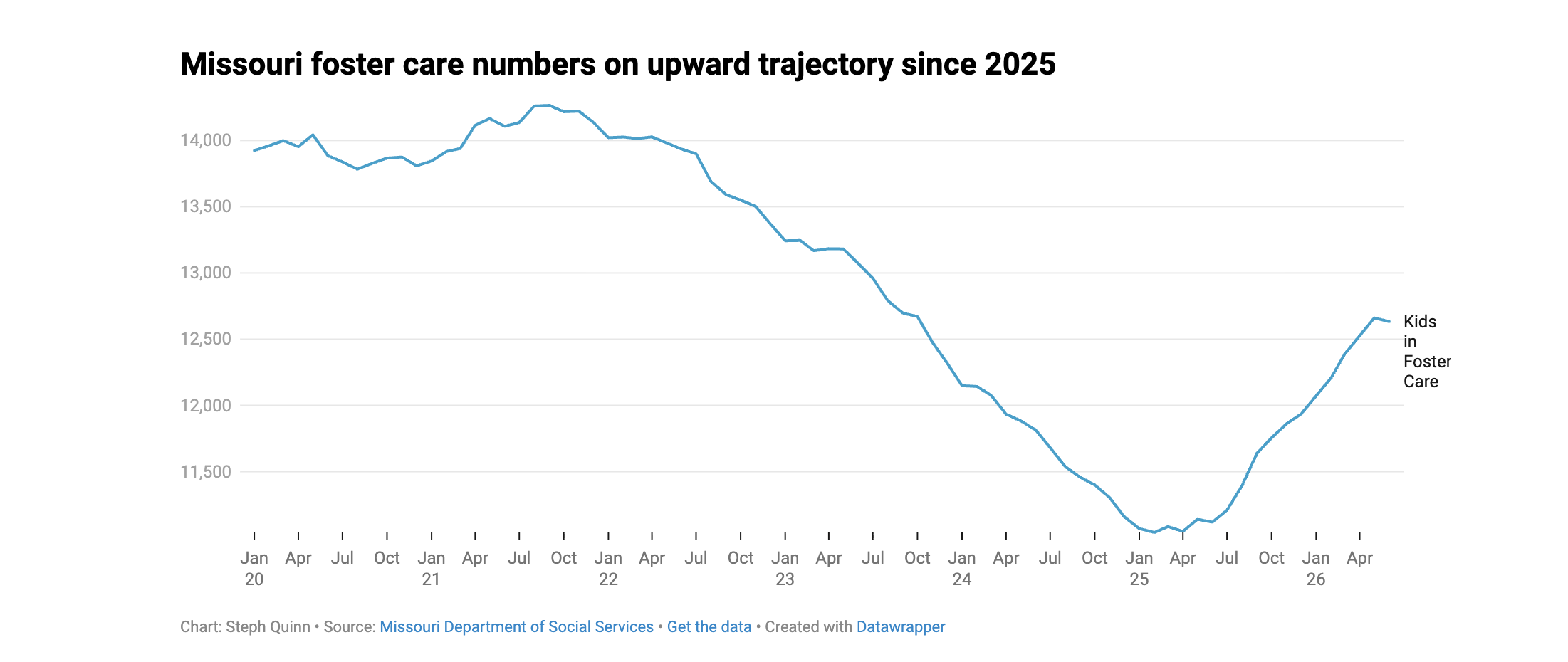
There were 12,633 Missouri children in foster care at the end of June, according to state data. That’s 11.4% less than September 2021, when the number of kids in foster care peaked at 14,265. But it’s 14.4% more than a five-year low of 11,041 in February 2025.
The increase began roughly around the same time the division was rewriting the policies that staff say were designed to keep children out of state custody.
One current division employee said workers in their office have so many open cases that they “do not know which way is up.” The employee spoke on condition of anonymity because they were not authorized to speak publicly and feared retaliation.
“I think that creates a more dangerous environment for children when you have investigators with 50 cases open and they can’t remember what they’ve done from one case to the next,” they said.
A statement from the department said the restructuring was based on staff feedback and is intended to “better balance workloads, provide more focused training and support to team members, and create greater consistency in how we respond to children and families across Missouri.”
Parents who have experienced assessments or investigations by the division described frequent caseworker turnover and mixed messages due to miscommunication or changing policies.
Angel Ornelas, of Oakville in south St. Louis County, whose son was placed in foster care in August 2025 because the state determined his medical needs weren’t being met, told The Independent her son’s caseworker confided to her that she was planning to quit. Ornelas’ son, who is still in foster care, has had several caseworkers.
“She told us she was going to quit because of how many cases were coming in,” Ornelas said. “She first went from 10 cases as a new person, and so many people were coming in. So now she had 50 cases at her desk.”
“She said, ‘I can’t do this,’” Ornelas said.
Restructuring
The restructuring is part of ongoing efforts by the Children’s Division to address longstanding problems of staff turnover and high caseloads without increasing funding.
In a January email to The Independent, the department described the creation of specialized teams as a way to maximize “efficiency within currently allocated funding levels.”
That has included the expansion of a team focusing on older foster youth and the launch in January of a critical investigations unit, which zeros in on child fatalities and near-fatalities due to alleged abuse or neglect.
Right now, workers can be assigned any hotline report within their circuit, from an assessment to see if a family needs services to address safety concerns to an investigation involving criminal allegations and close cooperation with law enforcement. Starting in September, they’ll start off focusing on family assessments and, with experience, join teams with specialties such as newborn assessments or sexual abuse investigations. And instead of reporting to supervisors in local offices, they’ll answer to regional managers leading specialized teams.
While staff said they hope the reorganization will lighten their workload, some said that without additional staff hires, they don’t see how it could.
A November 2025 policy required workers to meet with a supervisor within 72 hours of a potential case of abuse or neglect being assigned, even when they determined children to be safe. The same memorandum introduced three “consult guides” to structure the meetings and four checklists for supervisors to use when reviewing and submitting workers’ reports to close cases.
Three current division employees who spoke to The Independent on the condition of anonymity out of fear of retaliation pointed to changes last year to “team decision-making” meetings. The meetings brought together parents, division workers, the juvenile office and guardians ad litem at major turning points in families’ cases — prior to removals, after kids were moved into temporary placements with relatives or when foster parents were struggling.
The workers said the meetings, which included a neutral facilitator unfamiliar with the case, helped engage parents in safety planning and create stability in foster care.
An August 2025 message alerted division staff that they should no longer conduct the meetings prior to removing children from their homes. It indicated they should continue to conduct the meetings within 10 days of a child being placed with a relative through a Temporary Alternative Placement Agreement, which is part of a 2020 state law.
An April 2026 policy instructed workers to meet with a circuit manager — their boss’s boss — whenever families scored at “high” or “very high” risk of future child abuse or neglect according to a required risk assessment form and they did not recommend either services or a child’s removal from the home.
Allen said the form can put families under unwarranted scrutiny.
“There’s a lot of things held against families that put some families at high risk that really shouldn’t be,” Allen said.
A point gets added to a family’s risk score if a parent was abused or neglected as a child, or if the primary caretaker “has a historic or current alcohol or drug problem.” Families who have had previous encounters with the division are also scored at higher risk, even if past reports of abuse or neglect were not substantiated.
“They might be 20 years sober and clean now,” Allen said, “but for something that happened 20 years ago.”
Not everyone who tracks the division thinks more workers is the answer.
Richard Wexler, executive director of the National Coalition for Child Protection Reform, an advocacy group that argues child welfare systems remove too many children, told The Independent that while he doesn’t doubt that workers are overwhelmed, he doesn’t think the division needs more staff.
Wexler, who disagreed with Missey’s approach of hiring workers to reduce backlogs, said the state should invest in concrete assistance to alleviate poverty and services for families faced with substance use disorders or mental health conditions.
And Wexler said that type of assistance should come from a separate state agency, leaving division workers to focus on families where those services weren’t enough.
“That begins to ease your caseloads,” Wexler said, adding: “Give most workers the chance to do the job, and they’re more likely to stick around, because they will not burn out the same way.”
Johnston, the supervisor with the division, said policies are making it harder to help children and families.
“Leadership needs to give us the tools and staff to do quality work, trust our work, preserve the relationships local circuits have and get rid of unnecessary barriers that inhibit our progress,” Johnston said. “I feel like they are doing the opposite of all that.”