



MARC JACOBS
Hutch Post
Kansas wheat harvest results are proving highly variable, while producers are also keeping a close eye on the growing threat of New World screwworm and developments in federal farm policy. We had the opportunity to visit with John Jenkinson, an Ag consultant and farm owner in western Kansas.
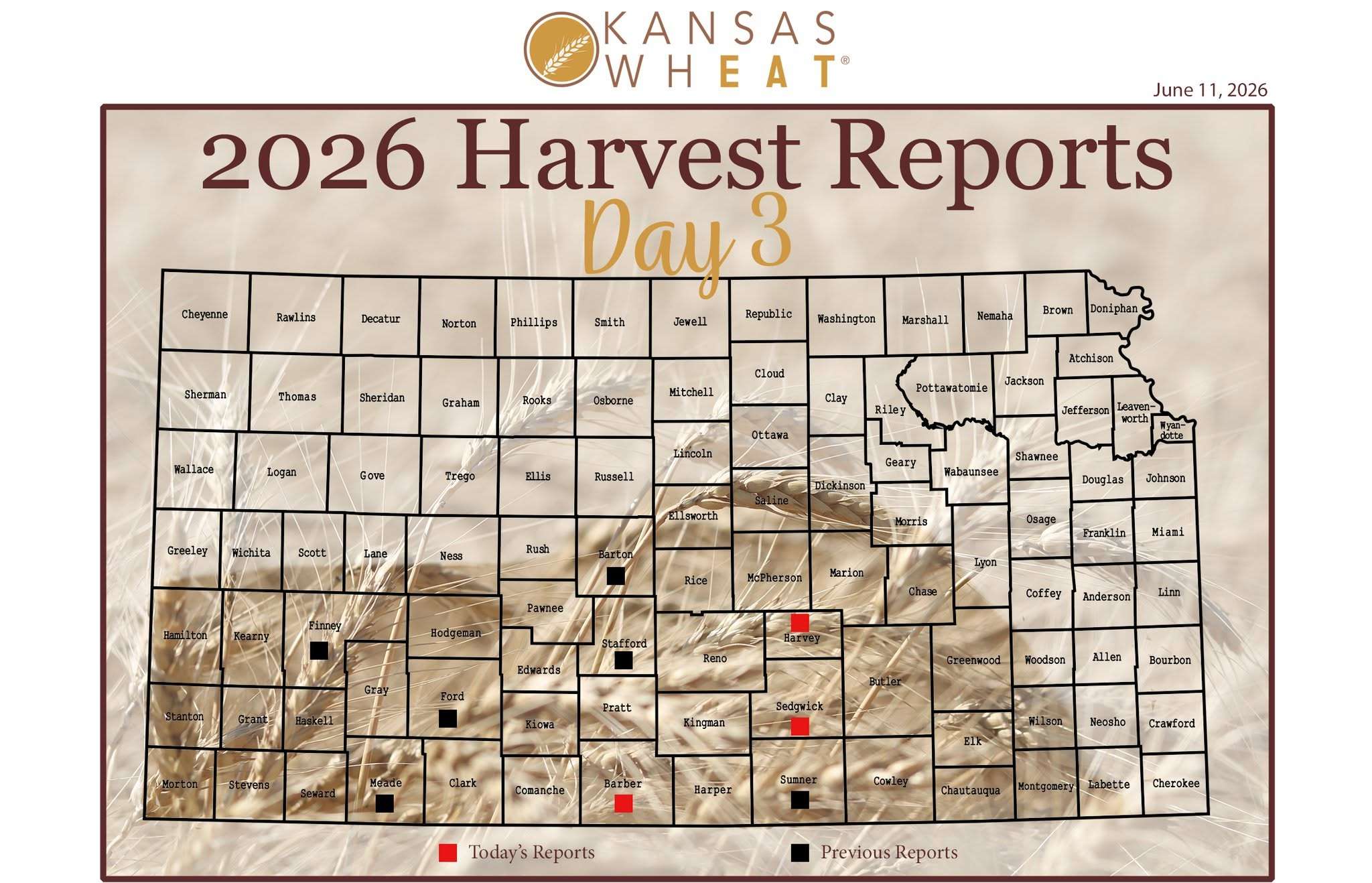
Wheat harvest producing mixed results
Jenkinson said harvest conditions across southwest Kansas have ranged from disappointing to surprisingly strong, depending on location and rainfall patterns.
Some producers have reported fields so heavily impacted by drought that they may abandon them rather than harvest. Others have been pleasantly surprised by yields exceeding expectations.
"I talked to a producer yesterday afternoon who was harvesting," Jenkinson said. "He thought he might make 20 to 25 bushels an acre and was getting close to 40 on one of his better fields."
Jenkinson noted that drought conditions during critical stages of crop development significantly reduced yield potential in many areas. Fields that once appeared capable of producing 35 to 40 bushels per acre are now yielding closer to 20 to 25 bushels in some cases.

Recent rainfall has created another challenge for producers. While moisture was welcomed after months of dry weather, it has encouraged weed growth in harvested and maturing wheat fields.
"The race is on to get it harvested before we have a big weed problem," Jenkinson said, adding that some farmers are considering herbicide applications that could delay harvest further.
Excessive rain also threatens grain quality by lowering test weights and bleaching wheat kernels.
Screwworm cases raise concern
Jenkinson also discussed growing concerns over New World screwworm after several confirmed cases were reported in Texas.

According to Jenkinson, most of the reported cases have involved calves, although infections have also been reported in a goat and a dog. He described the pest as a major threat to the North American livestock industry.
"This is a huge threat to the livestock industry, cattle in particular," Jenkinson said.

He noted that Canadian officials have already suspended livestock and beef imports from Texas until the situation is brought under control, raising concerns that additional trade restrictions could follow. Federal officials are working to contain the outbreak through sterile fly releases and other eradication efforts.
USDA WASDE report shows few surprises
Jenkinson said the latest U.S. Department of Agriculture World Supply and Demand Estimates report contained few major surprises.
Corn projections remained largely unchanged, with average farm prices estimated at $4.40 per bushel. Soybean outlooks also remained steady, with USDA forecasting prices around $11.40 per bushel.
The biggest adjustment involved wheat supplies, which were lowered. Jenkinson said the reduction was expected given poor production prospects in many wheat-growing areas.
While wheat prices have improved to around $6 per bushel, he noted many producers will not have enough bushels to fully benefit from the stronger market.
E15 debate continues
Jenkinson also addressed legislation under consideration in the U.S. Senate that would allow year-round sales of E15 gasoline.
He believes the proposal has a reasonable chance of passing but expects significant opposition from petroleum interests.

"I think it will happen, but not without hurdles and hiccups along the way," Jenkinson said.
He said E15 fuel currently offers consumers a lower-priced option at the pump and could increase demand for corn-based ethanol, though consumer adoption and fuel infrastructure remain important questions as the debate continues in Washington.