


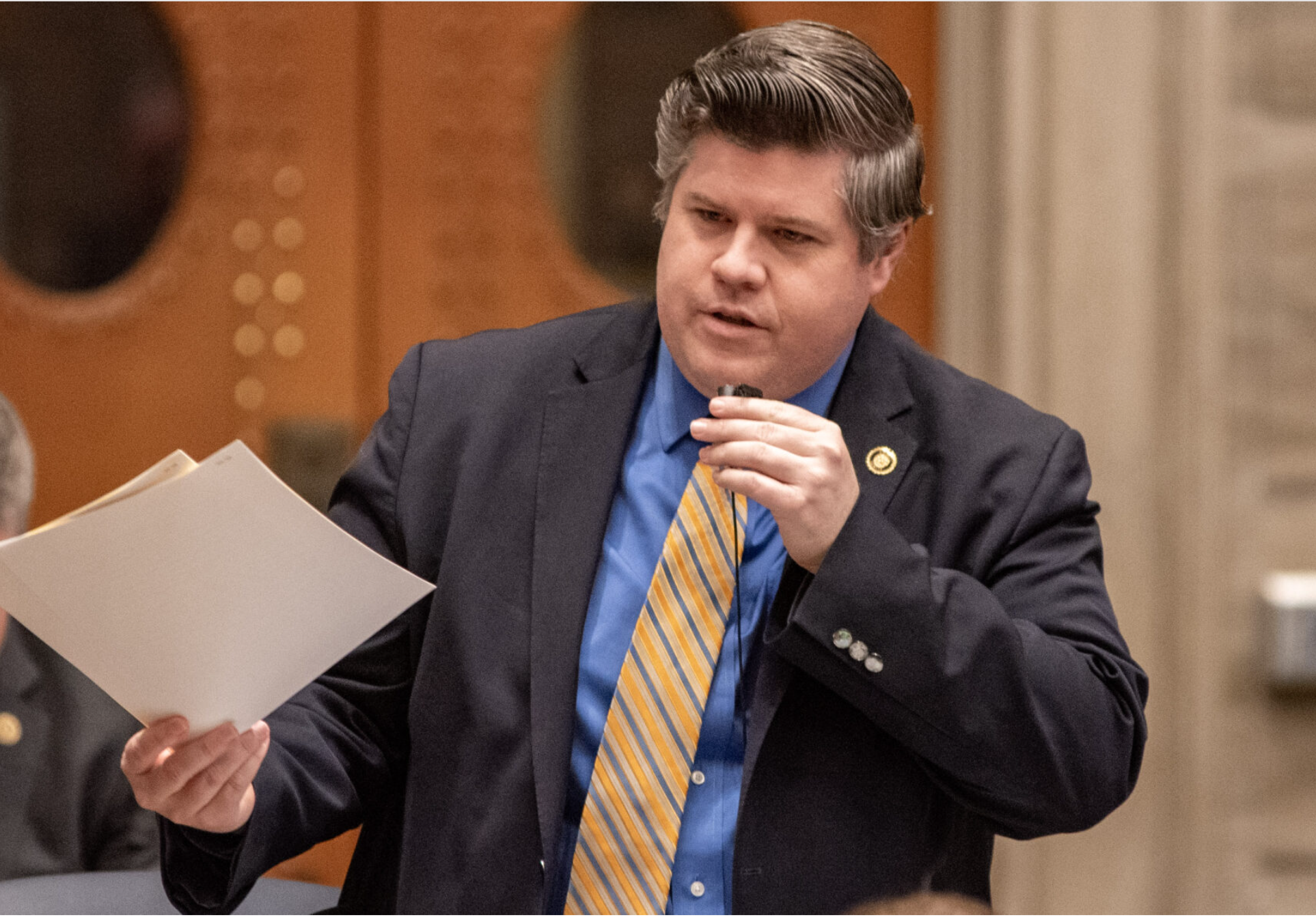
The only strong opposition during debate came from dissenting Republicans as Democrats remained silent after negotiations remove tax-cut triggers
BY: RUDI KELLER
Missouri Independent
After unveiling a new plan just before midnight to replace Missouri’s income tax with a broader sales tax, state Senate Republican leaders moved quickly to push it to passage early Thursday morning.
Democrats unanimously opposed the proposal, but only one said anything against it — and then only briefly. The harshest criticism came from Republican dissidents, who were numerous enough, along with the missing votes of absent members, that the measure had a bare 18-vote majority in the 34-member chamber.
“It is 15 minutes after midnight,” said state Sen. Joe Nicola, a Republican from Independence. “The people are not here to watch, to listen, to take part in the process.”
Two other Republicans — state Sens. Mike Moon of Ash Grove and Lincoln Hough of Springfield — joined Nicola in opposition. The bill came up at 11:30 p.m. Wednesday and passed 18-11 a little more than an hour later.
The plan to replace income tax with an expanded sales tax that could be imposed on “any goods or services” is unneeded, puts the state in a potentially dangerous financial position and implementation, if passed by voters, will dominate legislative debates for years to come, Nicola said.
“It is appalling to me that we’re going to remove some of the constitutional limits and ask the people to trust us to figure this out,” Nicola said.
How the plan would work
Finding a path to eliminating the state personal income tax is Gov. Mike Kehoe’s top priority for the year. The key to all versions of the proposal is expanding the state sales tax to previously untaxed services, such as labor for auto and home repairs, and goods now exempt, such as prescription drugs or gasoline.
The legislation, if approved in a final Missouri House vote, would go to voters later this year as a proposed constitutional amendment.
Republican state Sen. Curtis Trent of Springfield handled the proposal in the Senate and spent hours in negotiations with Democrats to achieve the quick passage. The version produced by those negotiations removed automatic triggers for tax rate cuts and the target date for eliminating the income tax.
Instead, it directs lawmakers to set tax cut triggers if the amendment is approved by voters and gives the General Assembly a five-year window to decide which goods and services would be taxable. Legislation expanding the sales tax or increasing the rate would have to include offsetting cuts in income tax rates.
As he explained the plan, Trent had a polite discussion with the only Democrat to speak, state Sen. Stephen Webber of Columbia.
“I appreciate you and all the senators that were involved,” Trent said. “I would characterize it as a Senate-wide effort. There’s a lot of folks that were involved in the negotiation, the discussion surrounding this, and I think that the process worked very well, and we’ve got a product that is worthy of putting in front of the people of Missouri for a decision.”
Webber agreed that Trent had accurately stated what was in the proposal and how it was crafted.
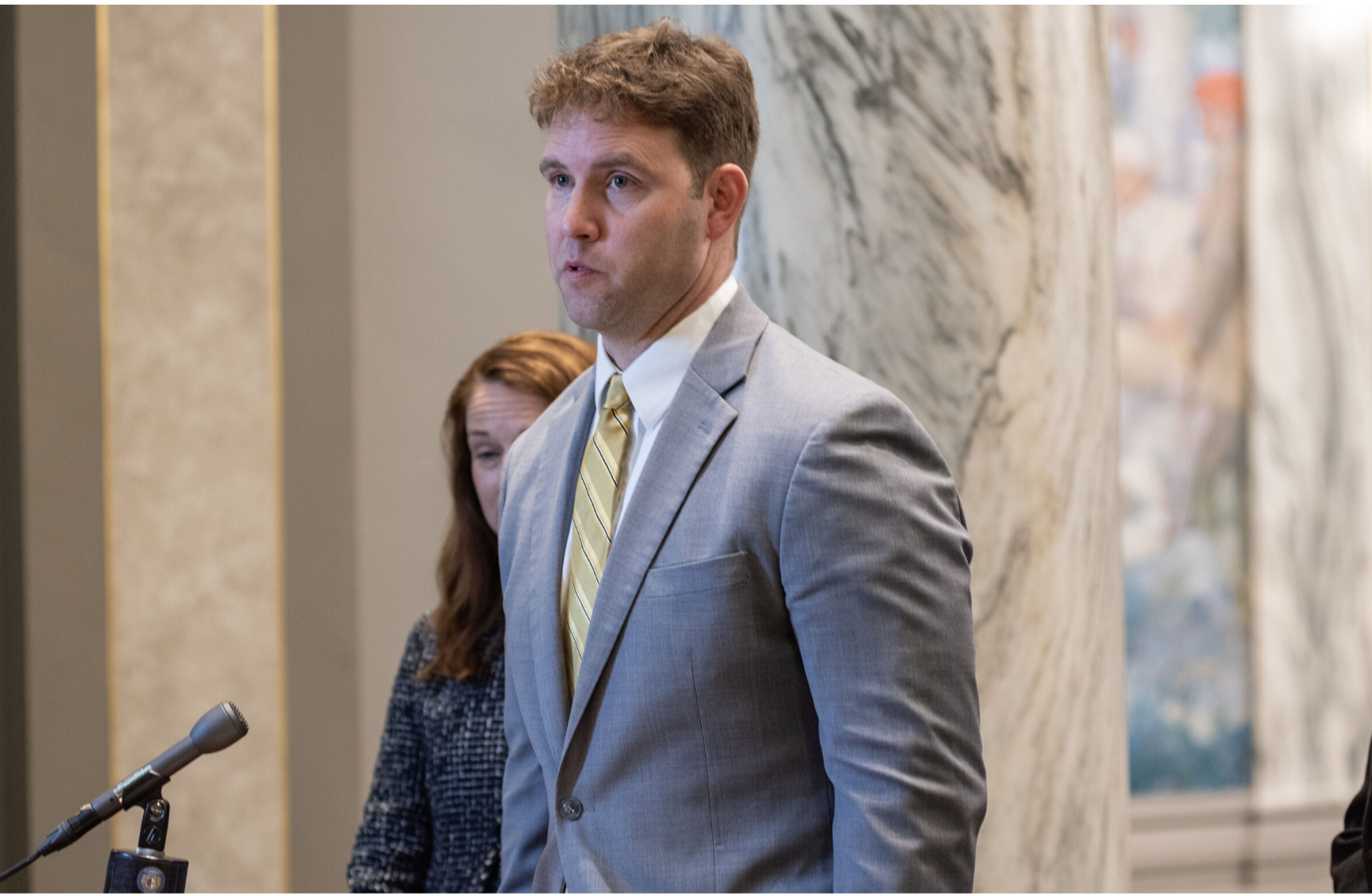
“I would say it was a Senate-wide effort,” Webber said. “I’m personally going to vote no, but I think it’s important to an issue of this size that the entire senate was involved, and it was and I thank you for that.”
Hough and Moon, however, punctured the bipartisan self-congratulations by questioning whether negotiations had truly been “Senate-wide.”
“I don’t think we should be under the misrepresentation that everyone was involved,” Hough said.
“Were you involved?” Moon asked.
“No,” Hough replied. “This is the first time I’ve seen the substitute, when I walked in here and I had it on my desk.”
The math of replacing the income tax
Missourians pay a stack of sales taxes on each purchase. The base is the statewide 3% tax for general revenue, with an additional 1.225% earmarked for schools, conservation, state parks, and soil conservation.
Local option taxes imposed by cities, counties and special districts mean the actual rate can be as high as 12%. In most locations, consumers pay tax rates of 7% to 8% at checkout.
To collect the approximately 65% of state general revenue produced by the income tax, the 3% rate would have to be increased by as much as 8.5%. To replace it without increasing the rate, lawmakers would have to find an additional $300 billion in economic transactions to tax.
The entire private sector economic output of Missouri in 2024 was $316 billion. The current sales tax produces about $3.2 billion annually, which means it covers about $100 billion in goods sold each year.
Under every version of the plan, earmarked state tax rates would be adjusted downward to offset the additional revenue from an expanded tax base. Local tax rates would also fall, but local governments would be given the option to offset the additional revenue by cutting property taxes or other levies instead of sales tax rates.
The House version used a priority list that required cuts in local sales tax rates before reductions in other taxes. The Senate-passed version gives local governments discretion to decide which taxes to cut first to offset new revenue.
From specific triggers to a broad framework
The House-passed version, and an earlier Senate version that won committee approval but was never debated on the floor, included specific revenue triggers for tax cuts.
The House plan cut the top tax rate by one-one hundredth of a percentage point for every $20 million in revenue in excess of the $13.43 billion in net general revenue collections in fiscal 2025.
The revenue estimate used for writing next year’s budget anticipates $13.65 billion. After applying an inflation adjustment to fiscal 2025 revenue, that would result in the top tax rate, currently 4.7% falling to 4.6% on Jan. 1, 2028.
The House-passed plan anticipated the state would see a small decline in expected revenue of about $50 million by mid-2028, followed by a revenue cut of up to $1 billion in the following fiscal year.
The costs exploded in the version approved in Senate committees. That proposal compared revenue in half of a fiscal year to the whole revenue of fiscal 2025 and the result would have been a revenue decline of up to $4.2 billion by June 30, 2027.
Who pays more?
Moon was the only senator who tried to amend the proposal. He wanted to limit the sales tax to new goods, arguing that lower-income Missourians were more likely to be looking for savings at second-hand shops.
Many people will see their tax burden increase, Moon said, because they pay little or no income tax.
A single parent making $25,000 a year — 32 hours a week at Missouri’s $15 per hour minimum wage — currently pays no state income tax. Missouri also does not tax Social Security benefits and exempts a portion of retirement income.
Moon said his amendment would be a signal that lawmakers understand the issues facing low-income Missourians.
“It’s tax money that some people can ill afford to pay and so I think it’s just a way that we can say as a legislature we do care about you,” Moon said.
Trent opposed the change. The proposal is a framework and it will be up to future lawmakers to fill in the details, he said.
“I don’t think that this is the place to do that, because if you can think of one good policy, in isolation, that should be in this proposal, then I suspect there are 33 other people out here that can also think of good policy positions, in isolation, that should be in this proposal,” Trent said. “And then you just then you’re, then you’re simply losing control of the ability to implement this.”
The ballot fight ahead
Speculation leading up to the Senate action centered on how long Democrats would filibuster the measure before Republican leaders moved to cut off debate. But Democrats signaled privately earlier in the day that polls showing the amendment would be difficult to pass meant they believe their party will do better in this year’s elections if it is on the ballot.
A St. Louis University/YouGov poll in February found that Missourians, by a margin of 52 to 29, prefer the sales tax as a means of raising state revenue over the income tax. But that same poll found that 53% of voters oppose a sales tax on residences, 60% oppose a sales tax on car repair labor, 50% oppose a sales tax on gasoline and diesel and 45% oppose adding sales tax to professional services like accounting.
A more recent survey by the Republican consulting firm Torchlight Strategies, first reported by the political newsletter MoScout, found that Missourians oppose the switch from income to sales tax 49% to 37%. After hearing a series of reasons to oppose it, only 18% remained favorable to the plan while 75% said they would vote no.
The findings are similar to a survey commissioned by the Missouri Association of Realtors in late February and early March, where two-thirds or more of respondents found opposition messages somewhat or very persuasive.
The Realtors oppose the proposal and have signaled they will be heavily involved in the campaign to defeat it. Missouri Realtors used the initiative process twice, once to prohibit sales tax on real estate transactions and again to prevent expanded sales taxes.
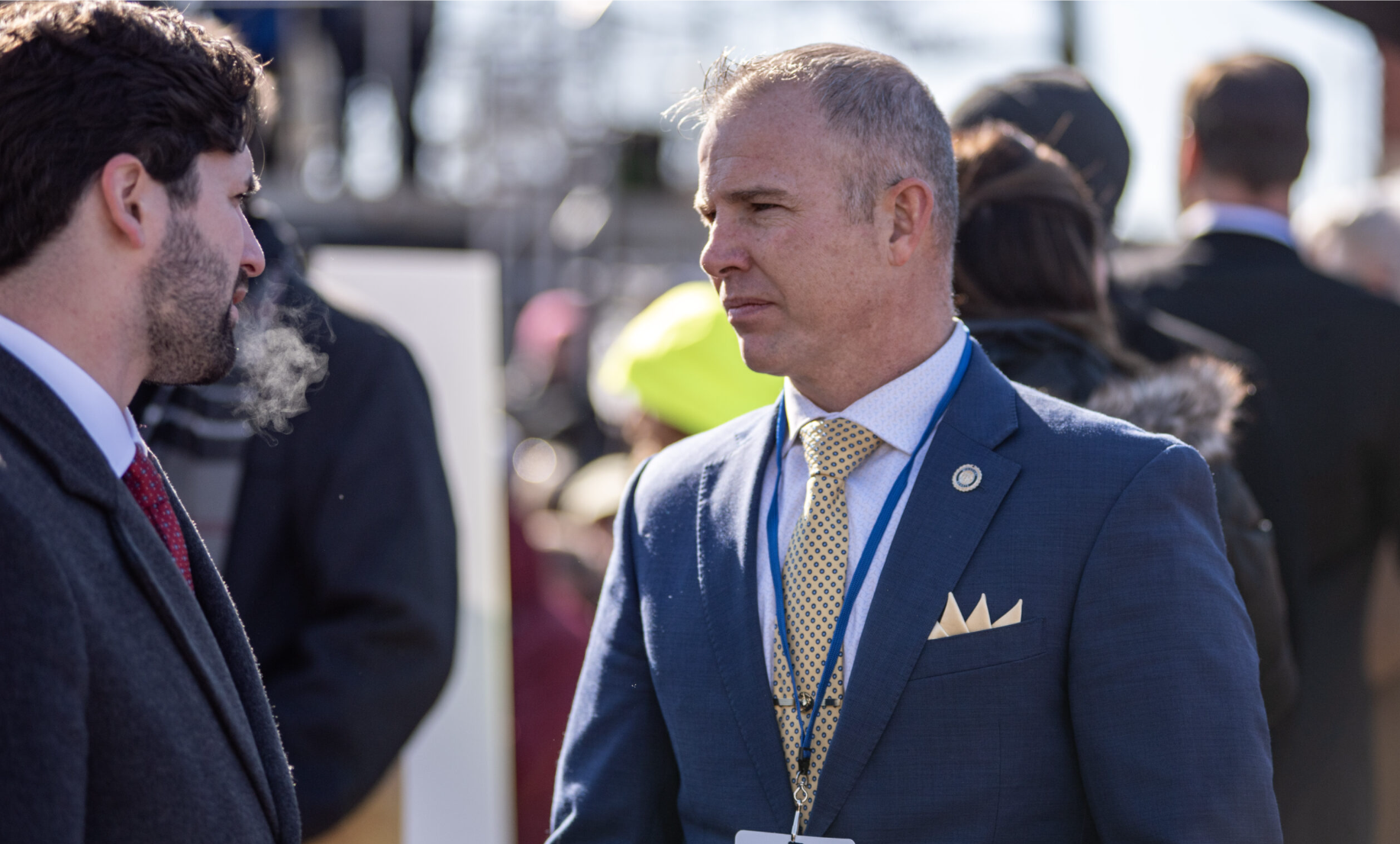
Eliminating the income tax in favor of sales taxes has been a goal of Missouri’s most prolific Republican donor, Rex Sinquefield.
Since 2016, Sinquefield has poured more than $28 million into Missouri politics.
Defending the plan, Republican state Sen. Rick Brattin of Harrisonville said getting rid of the income tax would be an economic boon to the state.
Brattin welcomed the change and said he hopes the state does not continue to collect as much tax money as it currently does. Government has grown too much and only starving it will make it smaller, he said.
“We have to force government to do that because it’s not going to willingly make those cuts unless it’s forced to make those adjustments to its budget,” Brattin said.
As he spoke, Brattin, who is a candidate for Congress in the 5th District, said the worst two amendments to the U.S. Constitution are the 1913 changes that allowed an income tax and established the direct election of U.S. Senators.
“Let’s be real,” Brattin said. “We lost complete, total control as a state and as a body, as our Founders intended.”
The proposal approved in the Senate Thursday morning leaves many things undefined on purpose, Trent said during his discussion with Moon.
“The goal of this legislation is to eliminate the income tax and to make sure it stays eliminated,” Trent said. “There’s a difference between putting into the framework the goal to be accomplished, and letting the people of Missouri vote on that goal to be accomplished, and prescribing a certain pathway, putting a certain methodology of how to accomplish that into the Constitution.”
For Nicola, solving issues in the way properties are assessed and taxed is a far more pressing issue than whether or not Missouri has an income tax.
“I wonder why we’re even debating this to begin with,” he said. “I certainly don’t see the need for it.”